
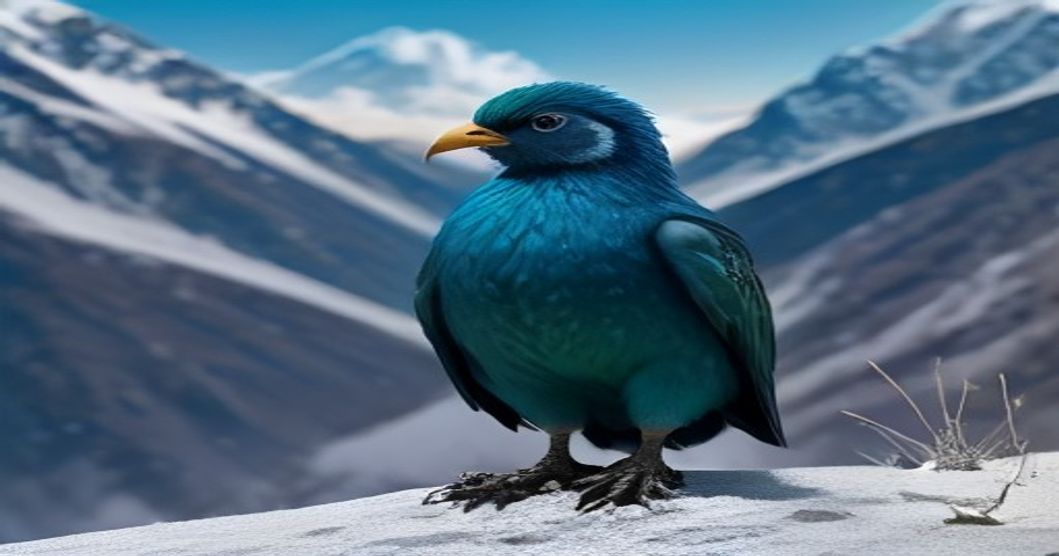
Introduction to the Himalayan Monal
The Himalayan Monal (Lophophorus impejanus) stands as one of the most breathtaking avian species in the world. As a prominent member of the pheasant family and holding the prestigious title of the national bird of Nepal, this magnificent creature captures the fascination of ornithologists, birdwatchers, and nature enthusiasts alike. Known scientifically for its striking appearance and fascinating ecological habits, the monal is a true gem of the high-altitude wilderness.
Sexual Dimorphism and Striking Appearance
One of the most remarkable features of the Himalayan Monal is its pronounced sexual dimorphism. Females sport a modest yet beautifully camouflaged brown plumage, which provides essential protection during nesting. In stark contrast, the adult male is an absolute riot of colors, boasting dazzling iridescent plumage that shimmers with hues of metallic green, blue, purple, and copper, topped with a distinctive green crest featuring elegant white tips. This visual masterpiece is not just for show; it plays a critical role in the species’ social and reproductive behaviors.
Diet, Foraging Habits, and Seasonal Migration
Equipped with a strong, slightly downward-curved beak perfectly adapted for digging and probing, the Himalayan Monal primarily feeds on seeds, tubers, roots, and various plant parts, supplemented by occasional insects. These birds typically emerge from their daytime hiding spots within dense bushes to forage on open slopes during the cooler hours of the morning and evening. Demonstrating remarkable ecological adaptation, they ascend to higher mountain elevations—reaching right up to the snowline—during the summer months to take advantage of abundant seasonal food sources.
Social Structure and Behavioral Dynamics
While the Himalayan Monal possesses strong wings and is fully capable of flight, it shares the characteristic reluctance of many game birds to take to the air, preferring instead to walk or run when startled. Observers will typically encounter these fascinating birds living in small, cohesive social groups consisting of a dominant male accompanied by a harem of several females. During the mating season, the male undergoes a breathtaking courtship display, enhancing his already vibrant colors while performing an intricate dance designed to captivate prospective mates.