
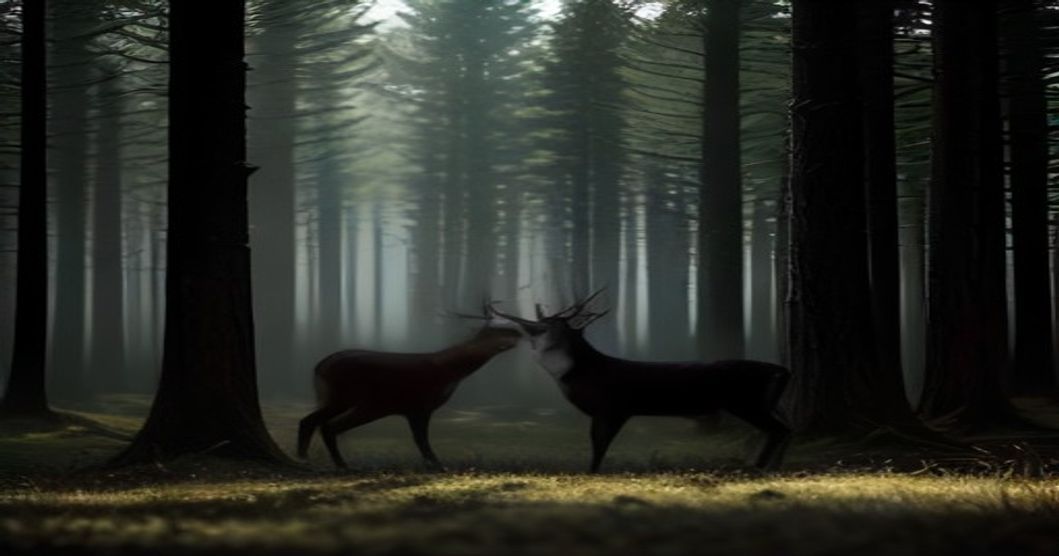
Across the temperate woodlands of Europe and the Near East, the European fallow deer (Dama dama) stands out as one of the most adaptable and visually striking members of the Cervidae family. Known typically for its pale, dappled coat and palmate antlers in mature bucks, this species occasionally exhibits remarkable genetic color variations that captivate naturalists, veterinarians, and wildlife biologists alike.
Physical Morphology and Size Proportions
In the taxonomic hierarchy of European cervids, the fallow deer occupies an intermediate size niche. It is distinctly larger and more robust than the diminutive roe deer (Capreolus capreolus), yet noticeably more compact than the majestic red deer (Cervus elaphus). An adult European fallow deer typically reaches a body length between 130 and 175 centimeters, with a shoulder height ranging from 80 to 105 centimeters. This moderate frame allows for exceptional agility through dense understory while maintaining sufficient mass to endure harsh winter climates across its native and naturalized ranges.
The Genetics of Melanism: Nature’s Black Panther
While the standard fallow deer coat is rich chestnut with distinctive white spots, polymorphic coloration is exceptionally prevalent in the species. Among the rarest and most striking phenotypes is melanism. Melanism is a genetic condition caused by an overproduction of the pigment melanin, driven primarily by mutations in the melanocortin 1 receptor (MC1R) or agouti signaling protein (ASIP) genes.
Just as a ‘black panther’ is not a distinct biological species, but rather a melanistic leopard (Panthera pardus) or jaguar (Panthera onca), a dark fallow deer remains a pure Dama dama. Sporting a deep charcoal-to-jet-black coat with barely discernible markings, this rare individual can truly be thought of as the panther among ungulates.
Health, Adaptations, and Wildlife Implications
From a veterinary and ecological standpoint, melanism does not impair the deer’s physiological baseline or reproductive viability. In fact, melanistic coats can offer distinct advantages and trade-offs. The darker pigmentation provides superior thermoregulation in colder climates by absorbing more solar radiation, and in deep, shadowed canopy forests—such as those found across Poland and Central Europe—it provides formidable camouflage against natural predators. Observing these majestic, dark-coated herbivores offers a fascinating glimpse into the diversity and resilience of wildlife genetics.