
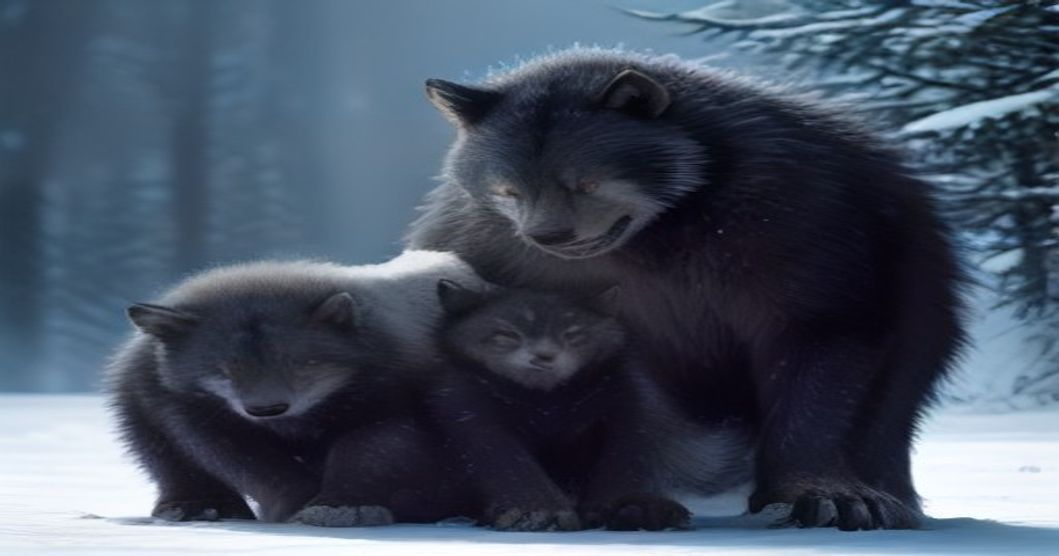
A Tale of Survival in the Wilderness
In the harsh and unforgiving landscapes of the northern wilderness, nature often reveals its most dramatic moments. Picture a serene yet unforgiving scene: a mother wolverine, fiercely shielding her vulnerable cub, stands her ground against a hungry, battered wolf desperate for a meal. While the backdrop might feature the remnants of an unlucky turtle, the true focal point of this encounter is the raw, instinctual power of maternal defense.
The Undisputed Powerhouse of the Mustelid Family
As a veterinarian and wildlife enthusiast, I am always fascinated by the incredible adaptations of mustelids. Wolverines (Gulo gulo) are legendary for their disproportionate strength and unmatched ferocity. Despite their relatively compact size—often resembling a small, stocky bear rather than a typical weasel—these resilient predators are known to successfully defend their territory and even take down prey significantly larger than themselves. Their dense musculature, powerful jaws, and fearless demeanor make them a force to be reckoned with, even for apex predators like the gray wolf.
Masterclass in Reproductive Biology
Beyond their physical prowess, wolverines possess fascinating physiological adaptations. One of the most remarkable is embryonic diapause, commonly known as delayed implantation. This unique evolutionary strategy allows the female wolverine to pause the development of a fertilized egg, ensuring that her cubs are born during the optimal time of year when environmental conditions and food availability offer the highest chance of survival.
Conclusion
The dynamic between a wolverine and a wolf highlights the relentless daily struggles of wildlife. From the mother’s unwavering courage to protect her offspring to the biological marvels that govern their species, the wolverine remains one of nature’s most captivating and resilient survivors.