
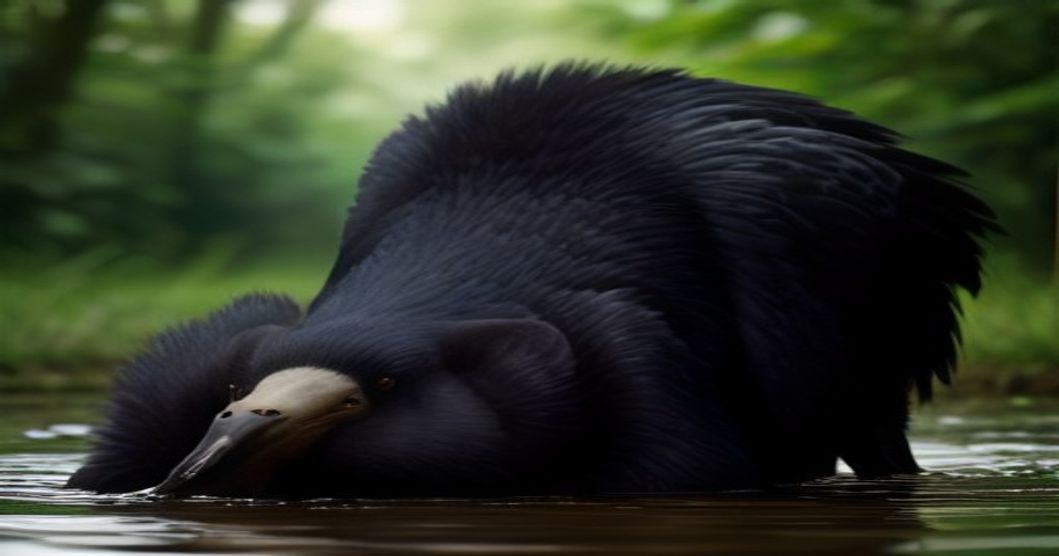
Nature’s Ultimate Clean-Up Crew
The American Black Vulture (Coragyps atratus), widely known as the Urubu, is a formidable scavenger native to the southern United States, Central America, and the expansive landscapes of South America. Frequently spotted near urban outskirts, dumps, slaughterhouses, and highways, these resilient birds play a crucial ecological role by feeding primarily on carrion. Though often misunderstood due to their scavenging habits, their diet is remarkably diverse; they are opportunistic feeders that occasionally consume ripe or rotting vegetation, and on rare occasions, they may hunt small mammals, bird eggs, or newborn livestock.
A Surprising Bond in the Wild
Despite their reputation as fierce scavengers, Black Vultures can also display surprisingly gentle and beneficial interspecies behaviors. A prime example of this is the remarkable sight of an Urubu meticulously grooming a capybara. Known as the world’s largest rodent, the capybara is famously laid-back and unperturbed by the bustling wildlife around it. As the vulture delicately picks ticks and other ectoparasites from the giant rodent’s coarse fur, both animals reap the rewards: the vulture gets a protein-rich meal, while the capybara receives much-needed pest relief.
The Importance of Mutualism in Animal Health
This unique interaction highlights the complex social and ecological dynamics present in the animal kingdom. From a veterinary perspective, natural grooming behaviors like this are vital for maintaining skin health and preventing parasitic infestations in the wild. While capybaras often rely on wallowing in mud and the assistance of various bird species to stay pest-free, encounters like these remind us of how interconnected ecosystem health truly is. Whether they are cleaning up the environment as nature’s undertakers or acting as personal groomers for South America’s most relaxed mammal, American Black Vultures prove to be endlessly fascinating creatures.