
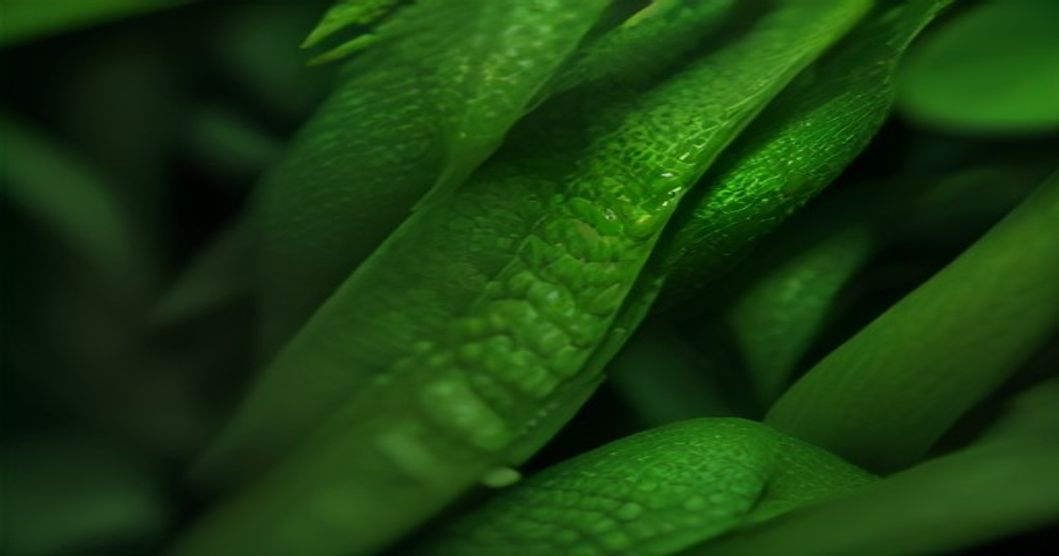
In the lush, biodiverse canopy layers of Central and South America dwells one of the most remarkably adapted colubrid reptiles on the planet: the Green Vine Snake (Oxybelis fulgidus). Known for its vivid emerald coloration and needle-thin silhouette, this arboreal specialist represents a fascinating study in evolutionary adaptation, predatory precision, and unique venom delivery mechanics.
Morphology and Structural Adaptations
The Green Vine Snake is instantly recognizable due to its hyper-elongated, slender body and tapered, lance-shaped head. While adult specimens frequently attain lengths ranging between 150 to 200 centimeters (5 to 6.5 feet), their body diameter rarely exceeds a mere 2 centimeters. This extraordinary morphology allows them to distribute their weight evenly across delicate twigs and foliage, perfectly mimicking the wild lianas and vine networks that drape the rainforest canopy. Their horizontal pupil alignment and acute binocular vision grant them superior depth perception, a vital adaptation for hunting in dense, three-dimensional arboreal environments.
Dentition and Venom Delivery: The Opisthoglyphous Mechanism
From a veterinary and herpetological perspective, Oxybelis fulgidus possesses an opisthoglyphous dentition pattern. Unlike viperids or elapids with hollow, front-mounted hypodermic fangs, the Green Vine Snake features enlarged, grooved fangs positioned toward the rear of the maxilla. Because they lack a high-pressure muscular venom pump, the snake cannot inject its venom with a rapid, instantaneous strike. Instead, it must grasp its prey and perform a deliberate chewing motion to channel toxic secretions from the Duvernoy’s gland into the puncture wounds.
Toxicology and Human Health Significance
The venom of the Green Vine Snake is formulated primarily to immobilize small ectothermic and endothermic prey rather than defend against large mammals. In humans, bites generally carry a low toxicological risk and are not regarded as fatal. The most commonly reported clinical signs include mild local edema, transient erythema, and localized numbness or paresthesia around the puncture site. However, medical and veterinary professionals caution that individual sensitivity varies significantly. In susceptible individuals, components of the venom can trigger moderate to severe allergic responses or systemic anaphylaxis, requiring immediate supportive medical intervention and wound monitoring to prevent secondary bacterial infection.
Specialized Hunting Strategies and Ecology
Oxybelis fulgidus is an obligate arboreal ambush predator. It spends hours suspended motionless, swaying gently in the breeze to simulate wind-blown vegetation. Its diet consists predominantly of tree frogs, anoles, and small avian species. Interestingly, herpetological field observations have documented specialized hunting strategies where these snakes lie in wait around flowering vines and epiphytes to target hummingbirds. When a hummingbird hovers to consume nectar, the vine snake strikes with blinding speed, neutralizing the bird before it can escape the canopy.
Herpetological and Veterinary Considerations
In captivity, the Green Vine Snake poses distinct husbandry and health challenges. Due to their nervous temperament, high susceptibility to chronic stress, and fragile musculoskeletal framework, they require specialized handling protocols. Captive management demands high ambient humidity, vertical space with extensive climbing networks, and a varied diet primarily composed of lizards or scent-transferred prey items. Understanding the biological nuances of Oxybelis fulgidus ensures better conservation of wild populations and sound clinical care within zoological institutions.