
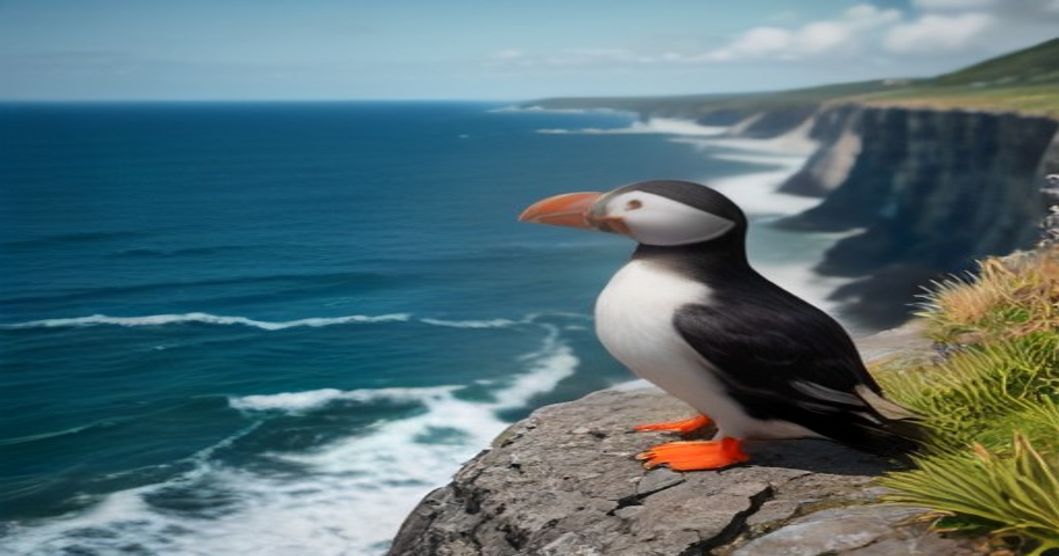
Meet the Atlantic Puffin
The Atlantic Puffin (Fratercula arctica) is one of the most recognizable and beloved members of the auk family. Inhabiting the rugged coasts and open waters of the Atlantic Ocean, these birds are as fascinating to observe as they are visually striking. On land, puffins are known for their distinct, upright posture and comically short legs, which give them a charming, waddling gait. Their landing technique is equally endearing; as they return to their colonies, they flap their small wings frantically, stretching their legs forward like miniature landing gear to safely touch down.
Social Behavior and Aerial Mastery
Puffins are highly social creatures that thrive in large, bustling colonies. While they may appear clumsy on land, they are surprisingly capable in the air, often performing unexpected and agile aerial maneuvers. Their curious and relatively tame nature has made them a subject of great interest for wildlife enthusiasts and ornithologists alike.
The Anatomy of the Iconic Beak
The most iconic feature of the Atlantic Puffin is undoubtedly its triangular, narrow beak. The coloration is dynamic, shifting from a slate-gray base to a vibrant orange-red tip. Interestingly, the beak’s proportions change as the bird matures; it deepens over time, the upper edge develops a distinct curve, and a noticeable break forms at the base. During the breeding season, the beak transforms into a brilliant, vivid orange, serving as a vital visual signal to attract potential mates.
Remarkable Foraging Skills
Puffins are exceptional hunters of the sea. A fascinating biological adaptation allows them to carry an impressive haul back to their chicks. Thanks to specialized serrated grooves inside their beaks, puffins can securely hold up to 10 small fish at once, showcasing their efficiency as parents and predators in the wild Atlantic environment.