
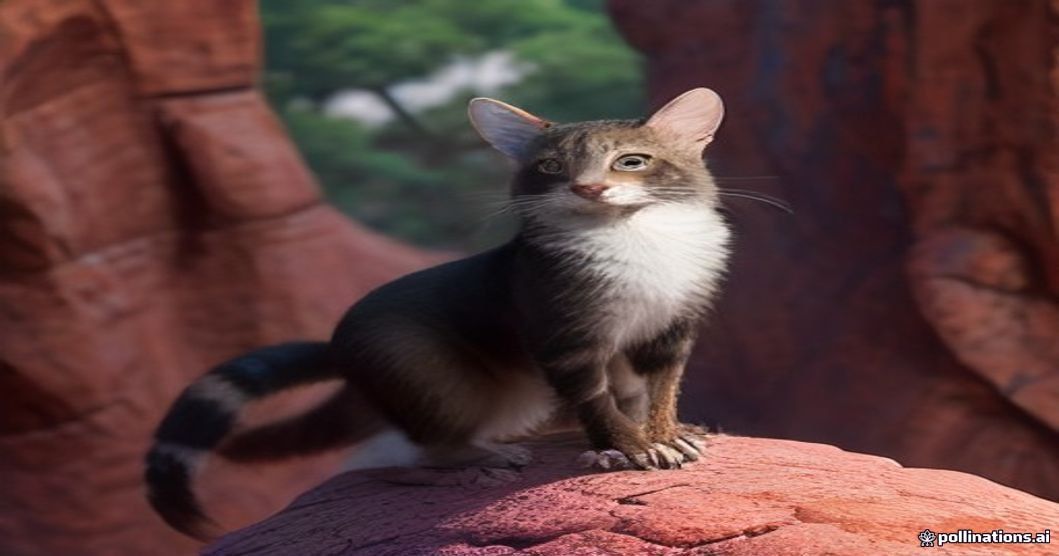
Meet the Ringtail: A Desert Marvel
Native to the arid landscapes of Arizona and widely distributed across North America, the ringtail (Bassariscus astutus) is a captivating mammal belonging to the raccoon family (Procyonidae). Currently listed as Least Concern by the IUCN Red List, this resilient creature goes by many names, including the ring-tailed cat, miner’s cat, bassarisk, and occasionally the cacomistle—though that moniker is more traditionally reserved for its southern cousin, Bassariscus sumichrasti. Despite their feline-like agility and colloquial names, they are not cats at all, but rather closely related to raccoons and coatimundis.
Extraordinary Physical Adaptations
As a veterinary and animal health expert, the anatomical adaptations of the ringtail never cease to amaze. One of their most remarkable features is their ankle joint, which is capable of rotating more than 180 degrees. This incredible flexibility allows them to effortlessly reverse direction while descending steep vertical surfaces. Coupled with a long, bushy, ringed tail that serves as a dynamic balancing organ, ringtails are supreme acrobats capable of navigating the narrowest of ledges with unmatched precision.
Masterful Climbers of Narrow Spaces
Ringtails possess specialized climbing techniques that set them apart in the animal kingdom. When confronted with narrow vertical passages or chimney-like rock formations, they can ascend using two distinct methods: they either press all four paws against one wall and their back against the opposite wall, or they press both right paws against one wall and both left paws against the other. This mastery of spatial physics makes them exceptional at evading predators and finding secure den sites.
The Secret Voice of the Night
Though they are primarily nocturnal and largely solitary, ringtails possess a surprisingly rich vocal repertoire. Their most typical cry is a remarkably loud, plaintive bark that can easily startle an unsuspecting camper in the desert night. In addition to this haunting call, they produce a variety of clicks, chatters, and growls that bear a striking resemblance to the vocalizations of their raccoon relatives. Understanding these vocal cues provides fascinating insight into the complex behavioral life of this elusive wild neighbor.