
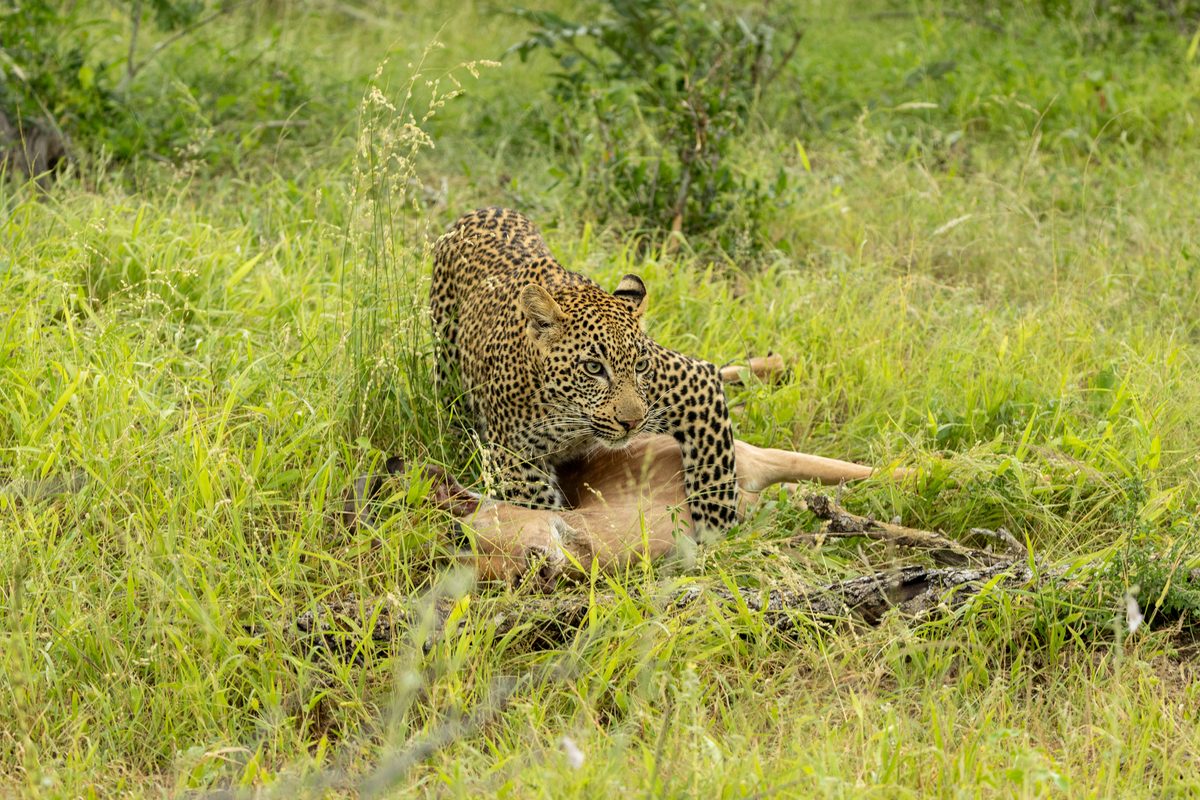
Predators are typically larger, faster, and far more powerful than the prey they hunt. Yet, across nearly the entire animal kingdom, the vast majority of hunting attacks ultimately fail.
Even cheetahs, famous for their blistering speed and frantic chases on wildlife documentaries, successfully capture their targets in only about three-fifths of their pursuits. For decades, biologists believed the answer lay primarily in manoeuvrability.
The Limits of the ‘Turning Gambit’
A long-standing biological model known as the ‘turning gambit’ suggested that because prey animals are generally smaller in size, they possess the ability to turn more sharply, slipping neatly out of a predator’s path with a well-timed pivot.
However, a landmark 2026 study conducted by researchers at the University of Amsterdam put this hypothesis to the test. The findings revealed that while manoeuvrability certainly plays a role, it does not tell the whole story.
By compiling extensive data on body mass, speed, and turning ability across land, air, and aquatic environments, scientists observed that prey animals are generally not nimble enough to completely compensate for their speed disadvantages through fleet-footedness alone.
The Crucial Role of Reaction Time
According to the researchers, the original model overlooked a vital factor: reaction time. No predator can respond instantly when its prey suddenly veers away; the biological processes of seeing, processing visual information, and reacting all take time.
These neurological delays are minuscule—often lasting only a fraction of a second. However, the critical dynamic is that the prey dictates the exact moment of evasion, turning and swerving whenever it chooses. Meanwhile, the pursuing predator can only react to a movement that has already occurred.
The physical margins can be exquisitely fine. The study indicates that certain aquatic prey must time their evasive turns within a narrow window of just 100 milliseconds, holding their nerve until the predator is nearly within striking distance before taking action.
Water offers an added advantage: because it is approximately 800 times denser than air, animals can push forcefully against it to execute sharper turns. This allows aquatic prey to slip behind, above, or below a pursuing predator before the predator has even registered the change in direction.
Exceptional Hunters and the Chase Dynamic
Despite these challenges, plenty of predators remain remarkably adept at securing a meal. African wild dogs stand out as some of the most successful hunters on the planet, boasting kill rates exceeding 85 percent during chases.
Similarly, the diminutive black-footed cat has been observed making hunting attempts as often as every 30 minutes, succeeding roughly 60 percent of the time and racking up as many as 14 kills in a single night.
Nevertheless, even for these elite hunters, the underlying mechanics of the chase remain the same. Once the critical element of surprise is lost, control of the chase shifts toward the prey, which can effectively dictate the direction, duration, and even the terrain of the pursuit.
Because a predator’s reaction time will always lag a fraction of a second behind, a series of calculated, well-timed evasive turns remains one of nature’s most effective defenses—often sending a hungry predator home entirely empty-handed.