
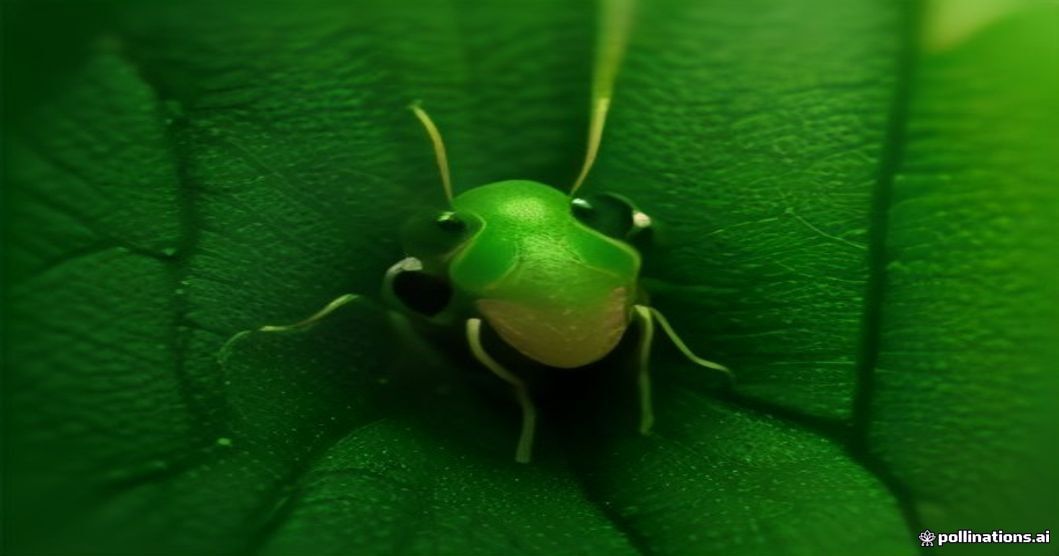
Meet the Ant-Mimicking Tree Hopper
In the vast and wondrous world of insects, nature never ceases to amaze us with its bizarre evolutionary adaptations. Among the most intriguing is Cyphonia clavata, commonly known as a tree hopper or ‘gorbatka’. This remarkable insect has evolved a fascinating defense mechanism: it mimics an ant, serving as a clever optical illusion for any predator that might think twice before tangling with a colony of aggressive ants!
The Marvel of the Pronotum
Insects belonging to the tree hopper family are instantly distinguished by their highly developed pronotum, which features outgrowths taking on astonishingly unusual and whimsical forms. In some species, the size of this ornate ‘hump’ actually exceeds the total body size of the animal itself. It often leaves observers wondering how the tiny creature manages to carry such a seemingly heavy load. Fortunately, physics comes to the rescue: these remarkable structures are entirely hollow and feather-light.
Delicate Defenses and Global Distribution
While the pronotum serves as a brilliant visual deterrent, it also has a practical escape function. Field observations show that these outgrowths can easily snap off at the base if a predator—or a careless hand—grabs the insect by the back, allowing the tree hopper to make a swift getaway. Tree hoppers are remarkably resilient and can be found on every continent across the globe, with the notable exception of frozen Antarctica.
However, this incredible biodiversity is distributed quite unevenly. While Europe is home to only three known species, a staggering 80% of all known tree hopper species thrive in the lush, humid jungles of the Amazon in South America, making it a true hotspot for these masterclass mimics.