
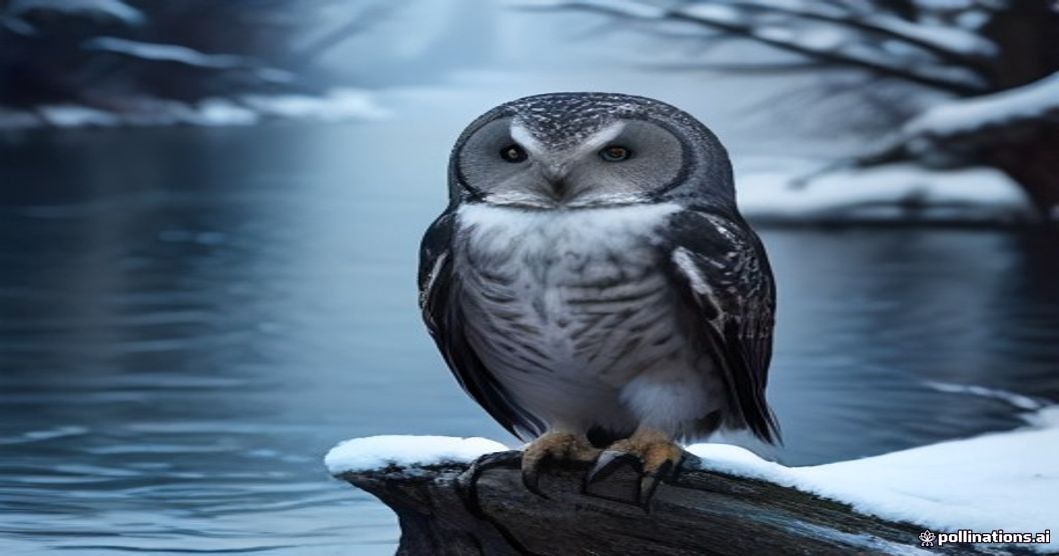
Introduction to the Majestic Blakiston’s Fish Owl
As a veterinarian and wildlife enthusiast, I am always captivated by the remarkable adaptations of our planet’s most elusive predators. Among them, Blakiston’s Fish Owl (Bubo blakistoni) stands out as a true titan of the avian world. This magnificent bird commands immediate awe, boasting an impressive wingspan of nearly 2 meters (180 to 190 cm) and a body length reaching up to 70 cm. Exhibiting fascinating sexual dimorphism common in raptors, the female is significantly larger than the male, with some individuals tipping the scales at an astonishing 4 kg.
Specialized Hunting Techniques and Diet
Unlike many other owl species that primarily target terrestrial rodents, Blakiston’s Fish Owl has evolved as an expert aquatic hunter. Its primary diet consists of salmonid fish, especially during their intense spawning runs. However, as an opportunistic carnivore, it also preys on crabs, muskrats, mink, and various amphibians. Its hunting strategy is a marvel of physics and patience: the owl typically perches on a rock, a steep riverbank, or a tree overhanging the water, scanning the surface for swimming prey. Once a target is spotted, it executes a precise dive, securing the fish with its powerful talons while remarkably never fully submerging its body. This specialized technique enables the bird to capture substantial prey weighing up to 1 kg with remarkable efficiency.
Behavioral Patterns and Seasonal Adaptations
Understanding the behavioral ecology of Blakiston’s Fish Owl reveals its resilience in harsh environments. While it is predominantly nocturnal, hunting patterns shift depending on the season. During most of the year, it may occasionally hunt during daylight hours, but in the height of summer, its activity is strictly limited to dusk and night. Survival becomes a critical challenge during the leaner winter months. When fish are scarce beneath frozen river ice, the owl adapts its diet by preying on other birds, small rodents, and even resorting to scavenging—sometimes capitalizing on human activity by stealing bait directly from traps.