
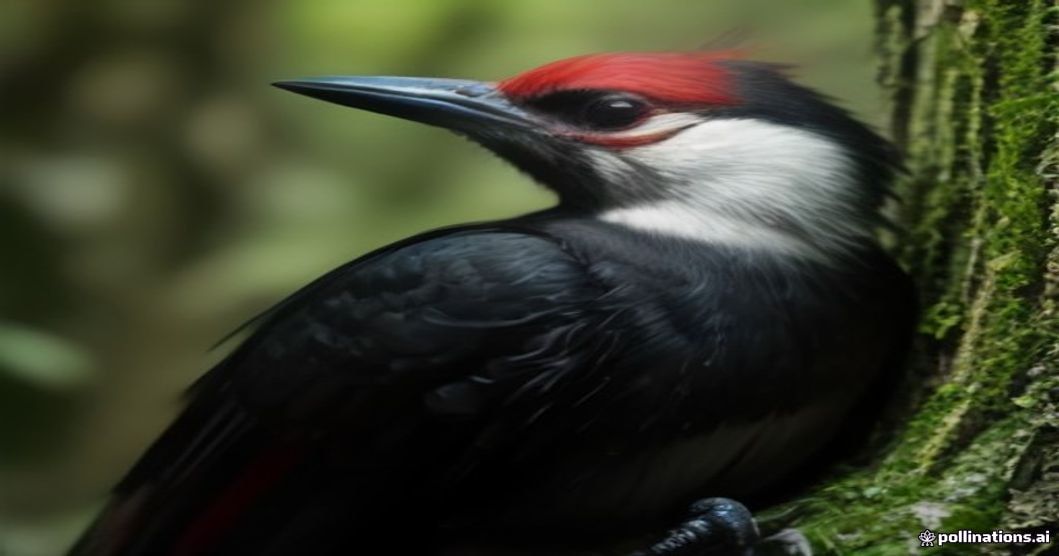
Introduction to North America’s Master Carpenter
As a veterinarian and pet care expert, I am endlessly fascinated by the incredible physiological adaptations found in the animal kingdom. Among North America’s most impressive avian architects is the Pileated Woodpecker (Dryocopus pileatus). Known as the largest woodpecker on the continent, this magnificent bird is a marvel of natural engineering, capable of feats that seem almost entirely impossible from a biomechanical standpoint.
The Staggering Biomechanics of Pecking
Consider the sheer physical toll of the Pileated Woodpecker’s daily routine: it strikes wood up to 12,000 times a day at a breathtaking speed of 20 strikes per second. To put this into perspective for humans, this repetitive impact is the biological equivalent of repeatedly striking a solid wall at a speed of 25 kilometers per hour. For any human, such trauma would result in immediate and catastrophic concussions, brain swelling, or severe cranial fractures. Yet, the woodpecker emerges from these intense foraging sessions completely unharmed.
Anatomical Marvels: Nature’s Shock Absorbers
How does the Pileated Woodpecker manage this without suffering from traumatic brain injury? The secret lies in a series of specialized anatomical adaptations. First, the bird possesses a uniquely sturdy skull constructed of spongy, trabecular bone that acts as a natural cushion. Furthermore, specialized cartilage at the base of the lower jaw is anchored to the skull by immensely powerful muscles. This clever anatomical design partially absorbs and deflects the kinetic energy of each blow, ensuring that the force barely affects the delicate brain tissues.
Additional protection is granted by scale and proportions. The woodpecker’s brain is remarkably compact and relatively small compared to its overall body size, rendering it naturally more resistant to inertial shaking and G-forces. By transforming its entire body mass into a living hammer, the woodpecker achieves maximum foraging efficiency while keeping its central nervous system completely safe.
Protecting Vision During Impact
Beyond cranial protection, the woodpecker must also safeguard its sensory organs—most notably, its eyes. With every forceful thrust into dense timber, a specialized, thickened nictitating membrane (a protective third eyelid) snaps shut milliseconds before impact. This acts as a biological safety goggle, protecting the eyeball from flying wood chips and holding the eye securely in place to prevent retinal detachment.
Conclusion
The Pileated Woodpecker stands as a stellar testament to evolutionary biology. By combining specialized skeletal structures, shock-absorbing cartilage, and protective ocular membranes, this remarkable bird accomplishes daily feats that continue to inspire human engineers in fields ranging from sports helmet design to automotive safety.