
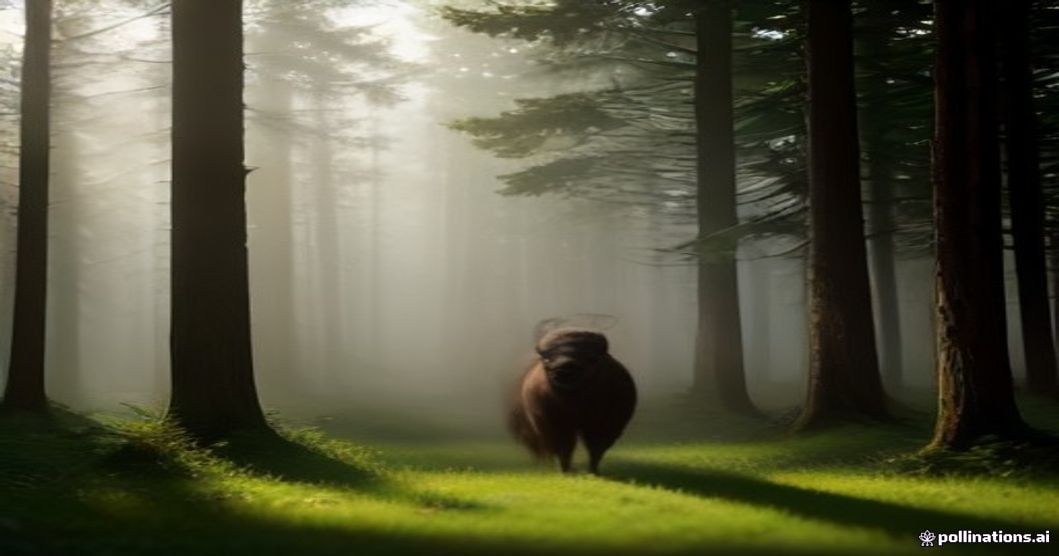
At the dawn of the twentieth century, the European bison (Bison bonasus), often hailed as Europe’s largest terrestrial herbivore, faced total annihilation. Centuries of relentless habitat fragmentation, unregulated hunting, and the severe ecological devastation brought by the First World War culminated in the collapse of wild populations. By 1927, after the last wild lowland and Caucasian bison fell to poachers, the magnificent wisent survived solely in a handful of European zoological gardens and private estates.
The Critical Bottleneck: Genetic and Health Complexities
The entire modern population of the European bison traces back to a minuscule founder pool of merely 12 individuals. From a veterinary genetics perspective, surviving such an extreme genetic bottleneck presents severe physiological and immunological obstacles. Inbreeding inherently increases homozygosity, limiting the genetic diversity of the major histocompatibility complex (MHC), which governs pathogen recognition and immune responsiveness.
Veterinarians and wildlife biologists have had to closely monitor several health anomalies associated with this limited genetic pool. In particular, conditions such as balanoposthitis (necrotic inflammation of the prepuce and penis in bulls), musculoskeletal abnormalities, and heightened susceptibility to bovine respiratory syncytial virus (BRSV) and parasitic burdens such as Fasciola hepatica and Ashworthius sidemi require meticulous, ongoing clinical surveillance.
The Triumph of Intensive Captive Breeding and Veterinary Surveillance
The survival of the European bison stands as a testament to the power of structured zoological medicine and international pedigree management. The establishment of the European Bison Pedigree Book in 1932 represented one of the earliest coordinated species survival plans in history. Through rigorous breeding programs, wildlife managers paired individuals to maximize remaining heterozygosity and prevent lethal congenital traits.
Alongside careful pairings, early wildlife veterinarians instituted strict biosecurity protocols. Quarantine procedures, prophylactic anthelmintic therapy, and targeted vaccination protocols shielded the fragile population from domestic livestock epidemics like foot-and-mouth disease and anthrax, allowing the species to establish robust captive reserves.
Reintroduction and Herd Health Management in the Wild
Beginning in 1952 with the release of bison into Poland’s pristine Białowieża Forest, reintroduction efforts gained momentum across Eastern and Central Europe. Today, thousands of free-ranging wisents graze in diverse European ecosystems. However, veterinary involvement remains just as critical now as it was a century ago.
Modern wildlife practitioners utilize non-invasive health monitoring, satellite telemetry, and regular fecal parasitology to evaluate herd condition. Cross-species disease transmission at the wildlife-livestock interface—particularly bovine tuberculosis (Mycobacterium bovis) and brucellosis—remains a paramount concern, requiring proactive cross-sector collaboration between veterinary authorities, agricultural sectors, and environmental managers.
Vital Lessons for Modern Wildlife Medicine
The miraculous recovery of the European bison underscores that extinction is not inevitable, even when a species is reduced to a fractional headcount. It highlights the irreplaceable role of veterinary science in captive propagation, disease prophylaxis, and population dynamics management. As we face unprecedented biodiversity loss worldwide, the survival story of the wisent serves as an enduring blueprint for turning scientific vigilance into ecological restoration.