
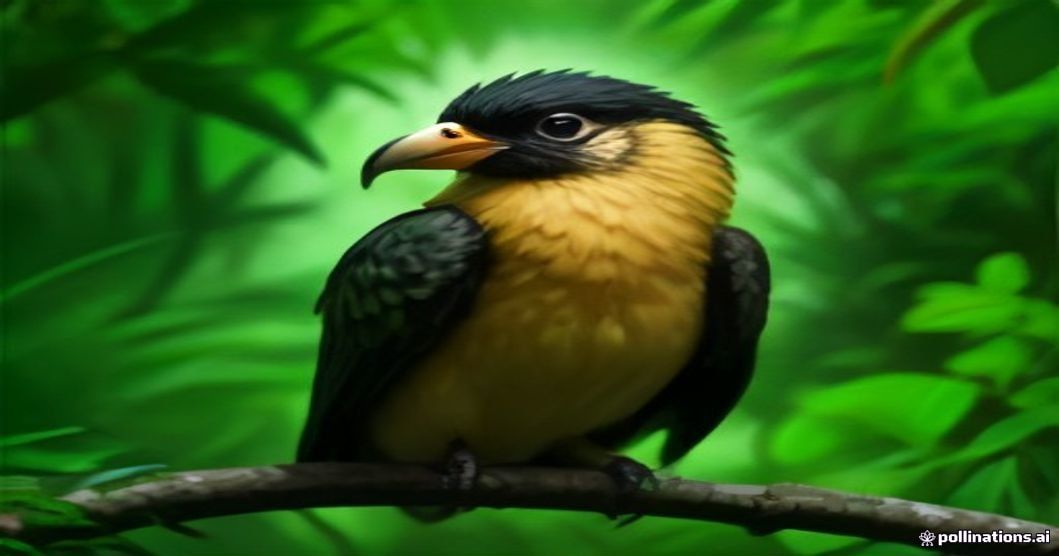
Introduction to the Amazon Umbrella Bird
Deep within the lush canopies of South America lives one of the most fascinating and visually striking avian species on the continent: the Amazon Umbrella Bird (Cephalopterus ornatus). Recognized as the largest songbird in South America, this remarkable creature captures the imagination of birdwatchers, researchers, and animal lovers alike with its unique physical adaptations and impressive presence.
Distinctive Anatomical Features
Measuring up to 55 centimeters in length and weighing as much to 570 grams, the Amazon Umbrella Bird is built unlike almost any other songbird. Its most defining characteristic is the elaborate crest of feathers atop its head, which curves gracefully forward to form a distinct “umbrella” shading its beak. Adding to its unmistakable silhouette is a large, fleshy throat wattle or pouch that hangs below, which can be partially or fully covered with specialized feathers.
Vocalization and the Tennis Ball Fun Fact
That unique throat pouch is not just for show—it serves as a powerful acoustic amplifier. During territorial displays and mating calls, the Umbrella Bird can inflate this remarkable pouch to about the size of a tennis ball! This biological adaptation allows the bird to project its booming, far-carrying calls across the dense rainforest canopy with astonishing volume and resonance.
Diet and Foraging Habits
As vital inhabitants of the rainforest ecosystem, Amazon Umbrella Birds play a crucial role in seed dispersal. Their primary diet consists of a rich variety of fruits and berries found throughout the upper canopy. To supplement their nutritional needs, especially during breeding seasons, they also forage for protein-rich spiders, insects, and various insect larvae.
Conservation and Veterinary Care in Captivity
While thriving in the wild, understanding the dietary and environmental needs of the Amazon Umbrella Bird is essential for avian veterinarians and conservationists. Replicating their natural frugivorous diet and providing ample space for their unique display behaviors are key to ensuring the health and longevity of these magnificent South American songbirds in managed care.