
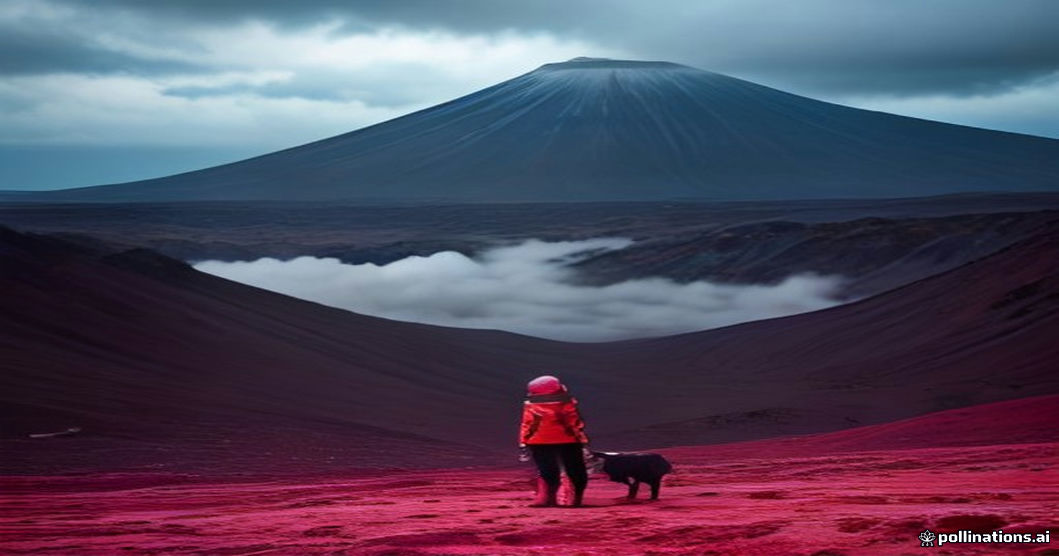
The Tolbachik volcanic valley is a landscape straight out of space—a Kamchatka vista of black solidified lava fields, steaming fissures, and red volcanic cones. While this extraterrestrial terrain offers breathtaking vistas for adventurous hikers, it presents a uniquely challenging environment for those traveling with animal companions. As veterinary and pet care experts, we must look beyond the striking scenery to evaluate how such extreme geothermal zones impact animal health and safety.
Navigating Volcanic Terrain: Paw Protection and Trauma Prevention
The rugged, razor-sharp edges of cooled basalt and obsidian in the Tolbachik valley pose severe risks to a dog’s digital pads. Unlike smooth hiking trails, fresh lava rock is abrasive and can quickly slice through paw leather, leading to deep lacerations, severe abrasions, and infection. Furthermore, radiant heat from subterranean thermal activity can cause invisible, yet agonizing, thermal burns on paw pads. Protective booties specifically engineered for extreme terrain are non-negotiable gear for any canine companion venturing into active volcanic landscapes.
Respiratory Health in Geothermal Zones
Volcanic environments are notorious for invisible atmospheric hazards. Even when a volcano is not actively erupting, fumaroles and steaming fissures continuously emit sulfur dioxide, hydrogen sulfide, and fine particulate volcanic ash. Inhaling these micro-particles can trigger acute respiratory distress, severe irritation of the mucous membranes, and secondary bronchitis—conditions that can rapidly become life-threatening for dogs and cats due to their sensitive respiratory tracts and proximity to ground-level gases.
Hydration and Nutritional Demands in Barren Landscapes
The stark beauty of Tolbachik is largely devoid of natural, safe drinking water sources. Streams running through volcanic fields are often highly acidic, mineral-laden, or contaminated with heavy metals. Traveling through this arid, high-altitude ecosystem skyrockets a pet’s metabolic and hydration needs. Pet owners must carry abundant potable water and high-density performance nutrition to sustain their working or hiking animals, guarding against dehydration, electrolyte imbalances, and exhaustion.
Veterinary Preparedness for Remote Expeditions
Exploring remote wilderness areas like Kamchatka requires rigorous veterinary preparation. Emergency first-aid kits must include sterile saline flushes for eyes and paws, cohesive bandages, antiseptic washes, and veterinarian-approved pain management. Recognizing the early signs of heat exhaustion, respiratory distress, and physical trauma ensures that our four-legged explorers remain safe while witnessing some of the most awe-inspiring geology on Earth.