
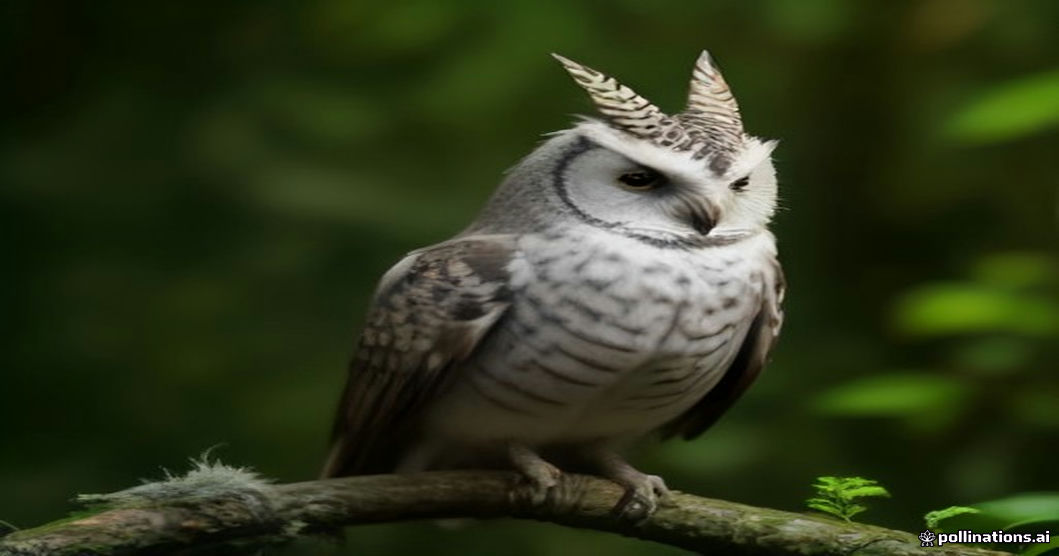
Introduction to the Crested Owl
Deep within the lush, dense rainforests of Central and South America resides one of the most enigmatic raptors of the night: the Horned Owl, scientifically known as Lophostrix cristata, more commonly referred to as the Crested Owl. As a professional veterinarian and avian enthusiast, studying this fascinating medium-sized bird offers a unique window into the rich biodiversity of neotropical ecosystems.
Physical Characteristics and Identification
The Crested Owl is easily distinguished by its striking appearance. Measuring between 38 to 43 centimeters in length and maintaining a healthy weight of 425 to 620 grams, this species commands attention through its ornate features. Its most defining characteristic is the presence of long, elegant white or yellowish-brown ear tufts, accented by a prominent white stripe that sweeps gracefully above the eyes and extends directly into the tufts. Their intricate plumage boasts a warm palette varying from rich yellows to deep browns, beautifully speckled with reddish spots that provide exceptional camouflage against the tropical bark.
Behavior and Nocturnal Lifestyle
True to the nature of most strigiforms, the Crested Owl is strictly nocturnal. By day, these birds practice remarkable devotion, roosting quietly together with their mates in dense thickets located near tree-lined streams and meandering rivers. This secretive daytime behavior protects them from diurnal predators and conserves their vital energy for the nocturnal hunt.
Dietary Habits and Ecosystem Role
When dusk falls, the Crested Owl emerges as a skilled apex predator of the understory. Their diet primarily comprises large insects and small vertebrates, showcasing their vital role in controlling local invertebrate and rodent populations. Intriguingly, bats comprise a modest 5% of their overall diet, highlighting their opportunistic yet specialized hunting strategies. Maintaining a balanced habitat is crucial for these remarkable birds, ensuring their continued survival in the ever-changing neotropical landscapes.