
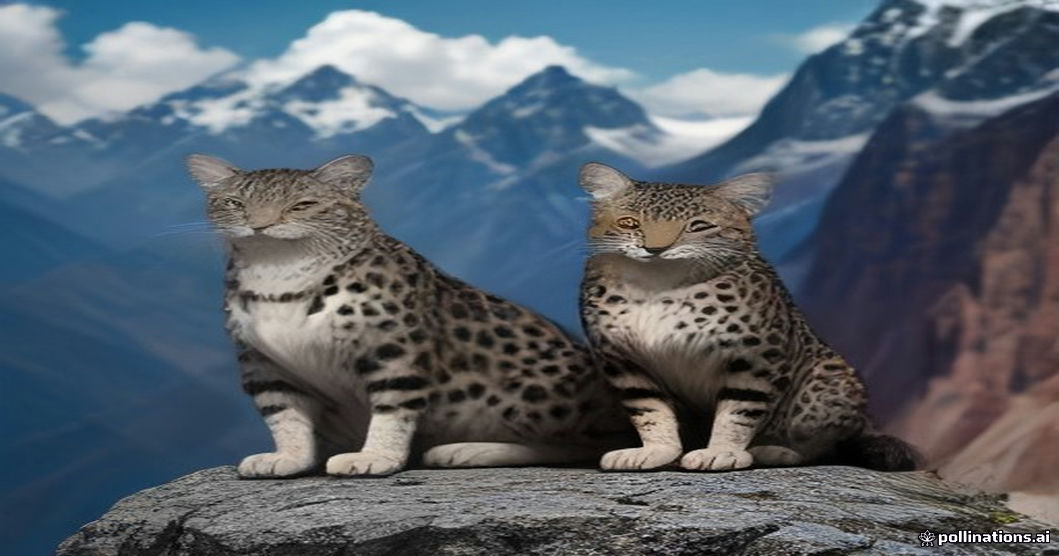
High in the windswept, arid steppes of the South American Andes, a silent predator navigates the treacherous rocky talus. Known scientifically as Leopardus jacobitus, the Andean mountain cat is universally recognized by wildlife biologists and feline specialists as the rarest and most threatened wild feline in the Americas. Adapted to survive extreme altitudes ranging from 3,000 to over 5,000 meters above sea level, this enigmatic carnivore embodies one of the most specialized predator-prey dynamics in the animal kingdom.
The Elusive Ghost of the High Andes
For centuries, the Andean cat existed largely as an ecological legend, known predominantly through indigenous folklore and sparse museum skins. So secretive and scarce is this feline that its first photographic documentation in the wild did not occur until the 21st century, with comprehensive camera-trap evidence emerging prominently around 2013. Inhabiting fragmented, barren landscapes characterized by freezing temperatures, intense UV radiation, and thin oxygen, the Andean cat relies on a dense, silvery-grey coat marked with irregular reddish-brown rosettes. Its most iconic physiological feature is an exceptionally long, thick tail—measuring roughly two-thirds of its body length—which functions both as a dynamic balancing pole along vertical precipices and as an insulating blanket against nocturnal sub-zero winds.
Predator-Prey Specialization: The Mountain Viscacha
From a comparative physiological and nutritional standpoint, wild felids are obligate carnivores, but few species display dietary specialization as tightly bound as the Andean cat. Its primary quarry is the mountain viscacha (genus Lagidium), a robust, rock-dwelling rodent belonging to the Chinchillidae family. Viscachas form dense colonies in fragmented boulder fields, utilizing high-speed agile leaps and acute sentinel alarms to escape predation. The Andean cat possesses unusually enlarged tympanic bullae (the auditory chambers of the skull), an anatomical adaptation that grants it exceptional hearing to detect the faint rustling of viscachas navigating subterranean crevices.
While wildlife biologists hypothesize that the Andean cat opportunistically targets other small alpine rodents, lizards, and ground-nesting birds, scientific scat analyses consistently reveal that mountain viscachas constitute the vast majority of its caloric intake. This obligate reliance on a single primary prey species creates severe evolutionary vulnerability: any decline in viscacha colonies directly impacts the nutritional health, reproductive success, and population density of the cats.
Veterinary Insights and Conservation Challenges
With an estimated mature wild population of fewer than 2,500 individuals, the Andean cat faces escalating pressures. Human encroachment through open-pit mining, water resource depletion, and habitat degradation directly destroys the fragile rocky ecosystems required by viscacha colonies. Furthermore, disease transmission from free-roaming domestic and feral dogs poses a devastating immunological threat to isolated Andean cat populations that have evolved without exposure to common canine and feline pathogens such as distemper, parvovirus, and feline leukemia.
Preserving this apex specialist requires coordinated international conservation, local community engagement, and rigorous non-invasive monitoring. Understanding the physiological, nutritional, and ecological demands of the Andean cat is crucial to safeguarding the delicate balance of the high-altitude Andean biome.