
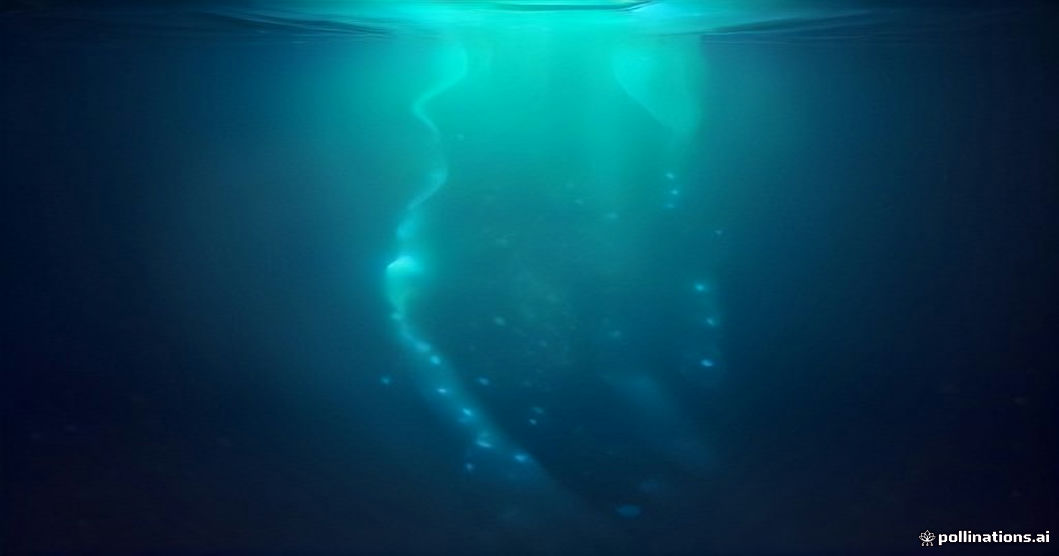
The oceanic depths harbor some of the most extraordinary biological phenomena on Earth, challenging our fundamental definitions of individuality, anatomy, and survival. Among these deep-sea wonders is the giant siphonophore (genus Apolemia), an ethereal creature whose breathtaking scale and communal physiology have captured the imagination of marine biologists, comparative anatomists, and naturalists worldwide.
A Symphony of Clones: What Is a Siphonophore?
At first glance, a siphonophore appears to be a solitary, ribbon-like organism drifting languidly through the water column. However, biological scrutiny reveals that it is not a single animal in the conventional sense, but a pelagic colonial organism. Classified within the phylum Cnidaria and related to jellyfish and corals, each siphonophore is comprised of thousands of specialized, genetically identical units known as zooids.
These zooids do not exist autonomously. Through remarkable developmental divergence, they differentiate to perform distinct physiological duties analogous to the organs in higher vertebrates. Nectophores propel the colony through rhythmic contractions; gastrozooids digest captured prey and distribute nutrients through a shared digestive canal; gonozooids are tasked strictly with reproduction; and dactylozooids, lined with potent stinging nematocysts, function as predatory tendrils to ensnare deep-sea prey.
The Historic 2020 Discovery off Western Australia
In March 2020, researchers aboard the Schmidt Ocean Institute’s research vessel Falkor were exploring the deep submarine canyons of Ningaloo off the coast of Western Australia. Utilizing the remotely operated vehicle (ROV) SuBastian at an extreme depth of approximately 630 meters (over 2,000 feet), the team encountered a monumental specimen of Apolemia.
Suspended in a massive, hypnotic feeding spiral, the outer ring alone was estimated at an astonishing 47 meters (154 feet) in length, with the entire organism potentially measuring over 100 meters if fully uncoiled. This breathtaking find established the specimen as a contender for the longest animal ever documented on planet Earth, comfortably surpassing the length of the largest blue whales and giant squids.
Survival in the Bathypelagic Zone
The morphology and behavior of the giant siphonophore are masterclasses in evolutionary adaptation to the deep sea. At depths surpassing 600 meters, sunlight is absent, temperatures hover near freezing, and hydrostatic pressures are immense. Food resources are scarce, making energy conservation paramount.
By deploying its colony in an expansive spiral configuration, the siphonophore creates an expansive, suspended drift net in the open water. This geometry optimizes the surface area of its stinging tentacles, allowing the organism to intercept drifting crustaceans, small fish, and other pelagic fauna while expending minimal metabolic energy. Its gelatinous body composition maintains near-neutral buoyancy, freeing it from the energy-intensive demands of constant active swimming.
Significance to Comparative Biology and Medicine
For animal health professionals, evolutionary biologists, and comparative physiologists, colonial organisms like the giant siphonophore provide vital insights into cooperative cellular biology, nerve signaling, and systemic integration. The seamless coordination of thousands of specialized bodies functioning as a single, healthy entity broadens our understanding of neuromuscular transmission, self-versus-non-self recognition, and systemic nutrient transport.
As deep-sea exploration technologies continue to advance, encounters with majestic wonders like the giant siphonophore remind us of how much remains to be discovered beneath the waves—and how vital the preservation of these delicate, extreme ecosystems is to the health of our global biosphere.