Jewel of the Masoala: A Deep Dive into the Endangered Red Ruffed Lemur
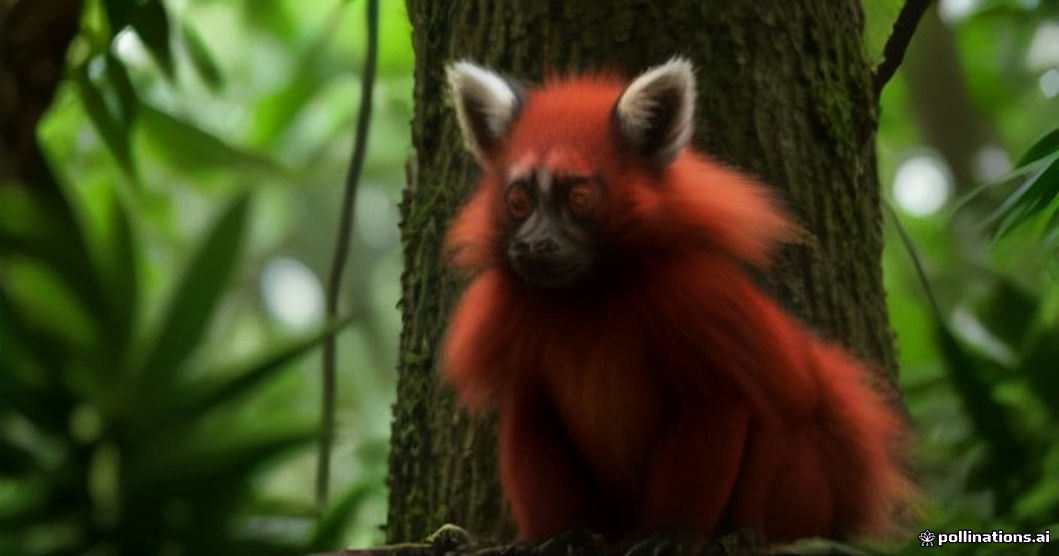
An Iconic Arboreal Specialist The Red Ruffed Lemur (Varecia rubra) stands as one of the most striking primates in the primate kingdom and holds the distinction of being one of the largest lemur species native to Madagascar. Distinguished by its thick, vibrant red pelage that contrasts sharply against a jet-black head, paws, and tail, this […]
An Iconic Arboreal Specialist
The Red Ruffed Lemur (Varecia rubra) stands as one of the most striking primates in the primate kingdom and holds the distinction of being one of the largest lemur species native to Madagascar. Distinguished by its thick, vibrant red pelage that contrasts sharply against a jet-black head, paws, and tail, this animal is as visually stunning as it is ecologically significant. Measuring approximately 50 centimeters in body length with a tail reaching up to 60 centimeters, these lemurs weigh between 3 and 4 kilograms, making them perfectly adapted for a life spent high in the canopy.
Habitat and Distribution
The Red Ruffed Lemur is a true geographic specialist. Found exclusively within the humid tropical rainforests of the Masoala National Park in northeastern Madagascar, their restricted range makes them particularly vulnerable to environmental changes. These primates are strictly arboreal, spending the majority of their lives 10 to 20 meters above the forest floor, where they navigate the dense foliage with agility and grace.
Diet and Longevity
As primarily frugivorous animals, the Red Ruffed Lemur plays a vital role in forest regeneration by acting as an important seed disperser. While their diet consists mainly of assorted tropical fruits, they also supplement their nutrition with young shoots and fresh leaves. In their natural habitat, these lemurs typically live for 15 to 20 years, though they have been known to reach up to 25 years under the specialized care provided in captivity.
Conservation Status and Vocalizations
Sadly, the Red Ruffed Lemur is classified as critically endangered. Habitat loss and fragmentation pose a severe threat to their continued survival. Beyond their physical beauty, they are perhaps best known for their remarkable vocalizations. These lemurs produce loud, musical calls that can resonate through the dense forest canopy, carrying for up to a kilometer to communicate with their troop members.
Written by Mohammed Murtaja
Editor-in-Chief & Executive Publisher of ZooPulse. Senior investigative journalist directing evidence-based research, veterinary science verification, and editorial governance.
Related Stories
 Wildlife
Unveiling the Wonders of the Amazon: The Caiman Lizard and Smooth-Fronted Caiman
Introduction to the Caiman Lizard The Caiman Lizard (Dracaena guianensis) is a magnificent, large semi-aquatic reptile native to the lush riverine forests of South America. Known for its striking appearance, it features powerful paired scales along its neck, tail, and back that grant it a distant, prehistoric resemblance to a true crocodile. Typically reaching lengths […]
 Wildlife
Discover the Lepilemur: Madagascar’s Fascinating Sportive Lemur
Introduction to the Lepilemur The Lepilemur, commonly known as the sportive lemur, is a truly unique primate species found exclusively on the diverse island of Madagascar. As a veterinary and pet care professional, studying these medium-sized animals reveals fascinating evolutionary adaptations that allow them to thrive in their specific island habitat. Physical Characteristics Sportive lemurs […]
 Wildlife
Unveiling the Bathysaurus ferox: The Apex Predator of the Deep Sea
Introduction to the Deep-Sea Monster In the mysterious, pitch-black realms of our planet’s deepest oceans resides a creature that sounds like it was pulled straight from prehistoric fiction. Meet the Bathysaurus ferox, often referred to as the deep-sea lizardfish. With a dinosaur-like appearance and a name that strikes fear into the hearts of benthic prey, […]