Unveiling the Wonders of the Amazon: The Caiman Lizard and Smooth-Fronted Caiman
Introduction to the Caiman Lizard The Caiman Lizard (Dracaena guianensis) is a magnificent, large semi-aquatic reptile native to the lush riverine forests of South America. Known for its striking appearance, it features powerful paired scales along its neck, tail, and back that grant it a distant, prehistoric resemblance to a true crocodile. Typically reaching lengths […]
Introduction to the Caiman Lizard
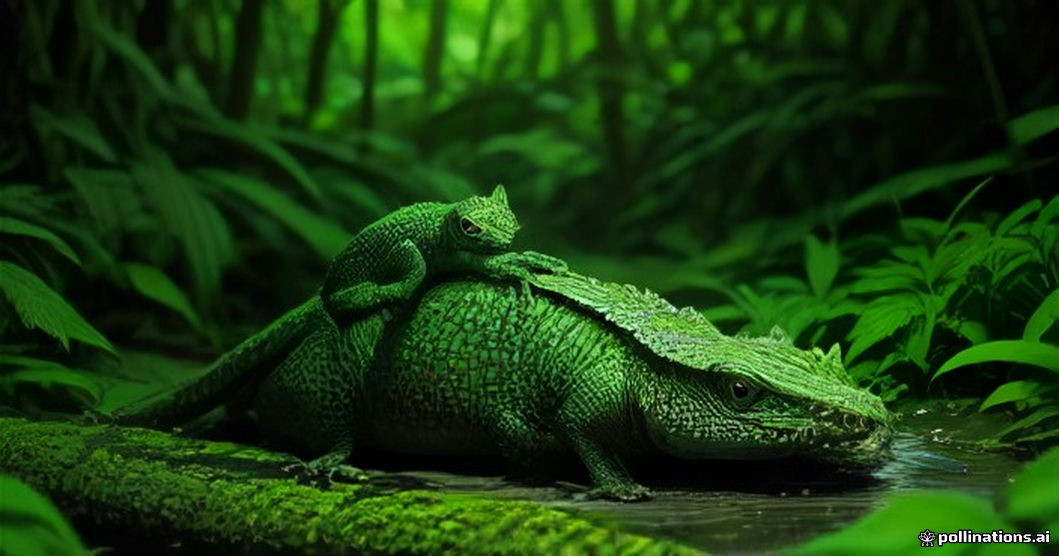
The Caiman Lizard (Dracaena guianensis) is a magnificent, large semi-aquatic reptile native to the lush riverine forests of South America. Known for its striking appearance, it features powerful paired scales along its neck, tail, and back that grant it a distant, prehistoric resemblance to a true crocodile. Typically reaching lengths of up to one meter, these fascinating creatures thrive in habitats that undergo periodic flooding.
Specialized Diet and Dental Adaptations
One of the most remarkable features of the caiman lizard is its specialized diet and corresponding dental structure. Their primary food source consists of freshwater snails. Thanks to their specialized, flattened molars, caiman lizards can effortlessly crush hard snail shells. Once crushed, they expertly spit out the hard shell fragments and swallow the soft-bodied mollusks whole.
Coexistence with the Smooth-Fronted Caiman
In their native South American ecosystems, caiman lizards often share habitat with the smooth-fronted caiman (Paleosuchus palpebrosus). This reptile stands out as one of the smallest living crocodile species. While males can grow up to 210 cm and females up to 150 cm, most individuals typically stay under 160 cm in length and weigh less than 20 kg.
Fascinating Hunting Behavior
Nature never ceases to amaze, and the smooth-fronted caiman is a prime example. These unique predators employ a specialized hunting strategy where they use their powerful tails to stun or kill prey. This distinct behavior makes the smooth-fronted caiman one of the rare crocodilian species known to utilize their tails actively in capturing food.
Written by Mohammed Murtaja
Editor-in-Chief & Executive Publisher of ZooPulse. Senior investigative journalist directing evidence-based research, veterinary science verification, and editorial governance.
Related Stories
 Uncategorized
Unveiling the Fascinating American Woodcock: A Master of Camouflage and Avian Anatomy
Introduction to the American Woodcock The American Woodcock (Scolopax minor) is a truly remarkable avian resident of the eastern United States. Spending the majority of its life on the ground, this secretive bird is heavily reliant on its exceptional plumage, which serves as a masterclass in natural camouflage among shrubs and dense undergrowth. Anatomy and […]
 Uncategorized
High-Altitude Pet Safety: Navigating the Extreme Elevations of the Gokyo Lakes Region
The Physiological Challenge of High-Altitude Environments The Gokyo Lakes, situated at a staggering 5,483 meters above sea level at the foot of Gokyo Peak in the Mount Everest region, represent one of the most breathtaking yet physiologically demanding environments on Earth. For pet owners and working dog handlers, these extreme altitudes present unique challenges that […]
 Uncategorized
Paws in the Dunes: Navigating Pet Care Amid Saudi Arabia’s Cinematic Sandy Landscapes
The Allure of the Saudi Desert Saudi Arabia’s breathtaking, cinematic sandy landscapes evoke a sense of timeless wonder. From the golden dunes of the Rub’ al Khali to the dramatic rock formations of AlUla, these vast expanses offer a stunning backdrop for outdoor enthusiasts. However, for pet owners and animal health professionals, these majestic environments […]