The Jewel of Queensland: Exploring the Life and Courtship of Queen Victoria’s Riflebird
Introduction to an Avian Wonder Tucked away within the lush, humid tropical rainforests of northeastern Queensland, Australia, resides one of the most spellbinding avian species on the planet: Queen Victoria’s Riflebird (Ptiloris victoriae). Holding the distinct title of being the smallest member of the renowned bird-of-paradise family (Paradisaeidae), this diminutive marvel measures merely 23 to […]
Introduction to an Avian Wonder
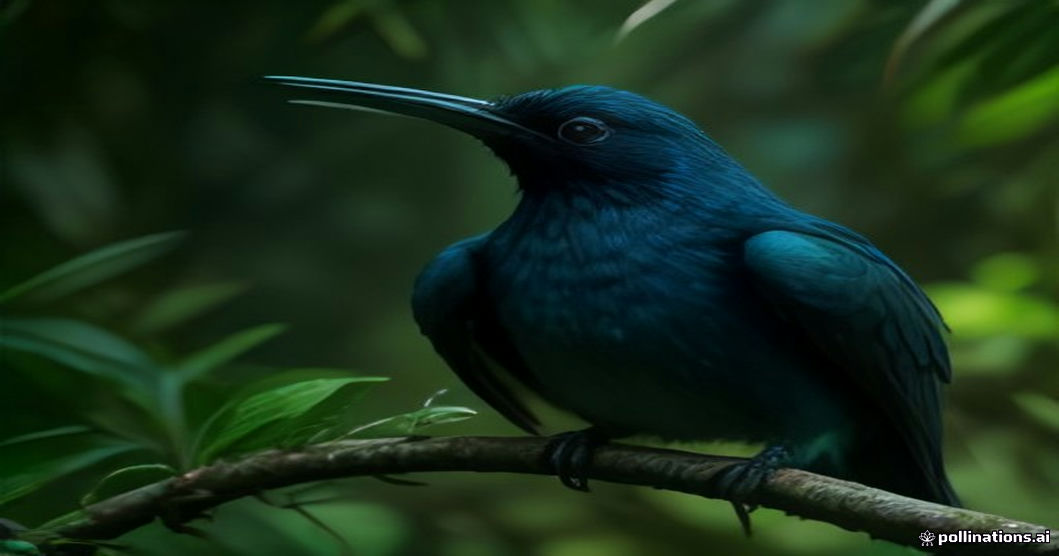
Tucked away within the lush, humid tropical rainforests of northeastern Queensland, Australia, resides one of the most spellbinding avian species on the planet: Queen Victoria’s Riflebird (Ptiloris victoriae). Holding the distinct title of being the smallest member of the renowned bird-of-paradise family (Paradisaeidae), this diminutive marvel measures merely 23 to 25 centimeters in length. Despite its modest stature, the riflebird commands immense fascination among ornithologists, avian enthusiasts, and wildlife health specialists alike due to its spectacular morphological adaptations and behavioral complexity.
Striking Sexual Dimorphism and Plumage
As with many members of Paradisaeidae, Queen Victoria’s Riflebird exhibits pronounced sexual dimorphism, an evolutionary trait driven by intense sexual selection. The adult male is a masterwork of natural artistry. His body is cloaked in deep, velvety black feathers that shimmer with an iridescent purple sheen depending on the angle of refraction. At the center of his chest lies a brilliant triangular gorget composed of scale-like, metallic blue-green feathers. In contrast, the female displays cryptic plumage dominated by warm, dappled shades of brown, fawn, and subtle barring on her underparts. This evolutionary contrast serves a critical survival function: while the male relies on flamboyant beauty to attract mates, the female relies on camouflage to protect herself and her vulnerable clutch from canopy predators.
The Canopy Ballet: Courtship and Visual Communication
The courtship display of Queen Victoria’s Riflebird represents one of the most intricate visual spectacles in the animal kingdom. When a male establishes his chosen display perch, he meticulously positions himself to capitalize on the dappled sunlight filtering through the dense rainforest canopy. To initiate his performance, he fluffs and raises the velvety feathers along his throat and flank, maximizing the optical contrast of his reflective gorget.
In a climactic behavioral sequence, the male sweeps his rounded wings upward, arching them dramatically over his head until the tips nearly meet in a circular silhouette. He snaps his head backward to expose his metallic throat patch directly to the zenith of the sun’s rays and begins an unbroken, rhythmic sway from side to side. This mechanical, almost hypnotic dance functions as a clear health indicator; only a male in peak physical condition, free from parasites and nutritional deficits, can maintain the stamina, feather perfection, and symmetry required to satisfy the discerning female observer.
Nutritional Ecology and Foraging Dexterity
From a nutritional and ecological perspective, Queen Victoria’s Riflebird maintains a balanced omnivorous diet vital for metabolic health and plumage maintenance. Their sustenance consists primarily of arthropods gleaned from tree bark and epiphytic mosses, alongside a rich variety of seasonal rainforest fruits and berries. The species displays remarkable physical dexterity while dining: individuals have been observed anchoring larger fruits firmly with one foot while systematically stripping and peeling the tough outer skin with their curved, chisel-tipped beaks. This tool-like manipulation reflects acute cognitive problem-solving and highly coordinated motor skills essential for foraging in dense arboreal environments.
Conservation and Royal Legacy
Queen Victoria’s Riflebird carries a regal moniker, having been named in honor of Queen Victoria, who reigned over the United Kingdom from 1837 to 1901 during the golden era of natural history exploration. Maintaining thriving populations of these birds relies heavily on preserving the structural integrity of Queensland’s wet tropical forests. Safeguarding their localized habitats ensures that the intricate life cycles, foraging niches, and breathtaking courtship displays of Australia’s pocket-sized bird-of-paradise continue to enrich the biodiversity of our natural world.
Written by Mohammed Murtaja
Editor-in-Chief & Executive Publisher of ZooPulse. Senior investigative journalist directing evidence-based research, veterinary science verification, and editorial governance.
Related Stories
 Uncategorized
The Incredible Transformation of the Dusky Batfish: A Veterinary and Marine Care Guide
The Pinnate Batfish: Nature’s Master of Metamorphosis Among the vast array of marine species, few creatures exhibit a life cycle as visually striking and biologically fascinating as the Dusky Batfish, scientifically known as Platax pinnatus. Also commonly referred to as the Pinnate Batfish or Longfin Batfish, this Indo-Pacific marine fish challenges our perception of growth […]
 Uncategorized
Unveiling the Black Grenadier: A Fascinating Deep-Sea Dweller
Introduction to the Mysterious Black Grenadier In the vast, icy realms of the northern Pacific Ocean lies a creature of profound mystery: the Black Grenadier. As a veterinarian and animal health expert, exploring the biodiversity of our planet’s most extreme environments never ceases to amaze. While not a traditional household pet, understanding the marine life […]
 Uncategorized
Avian Apex Predator: The Jabiru Stork and Its Wetland Hunts
Introduction to the Majestic Jabiru As a veterinarian and wildlife enthusiast, I am always captivated by the remarkable adaptations of tropical wetland species. The Jabiru (Jabiru mycteria) stands out as a true giant among birds. Native to the rich ecosystems of tropical America—ranging from southern Mexico down to Uruguay and northern Argentina—this magnificent stork commands […]