Unveiling the Peters’s Elephant Shrew: Africa’s Remarkable Micro-Giant
Introduction to Peters’s Elephant Shrew As a veterinarian and pet care expert, I am always fascinated by the incredible diversity of the animal kingdom. Among the most intriguing small mammals is Peters’s Elephant Shrew (Rhynchocyon petersi), a unique creature native to the lush forests of Kenya, northeastern Tanzania, and nearby islands such as Zanzibar and […]
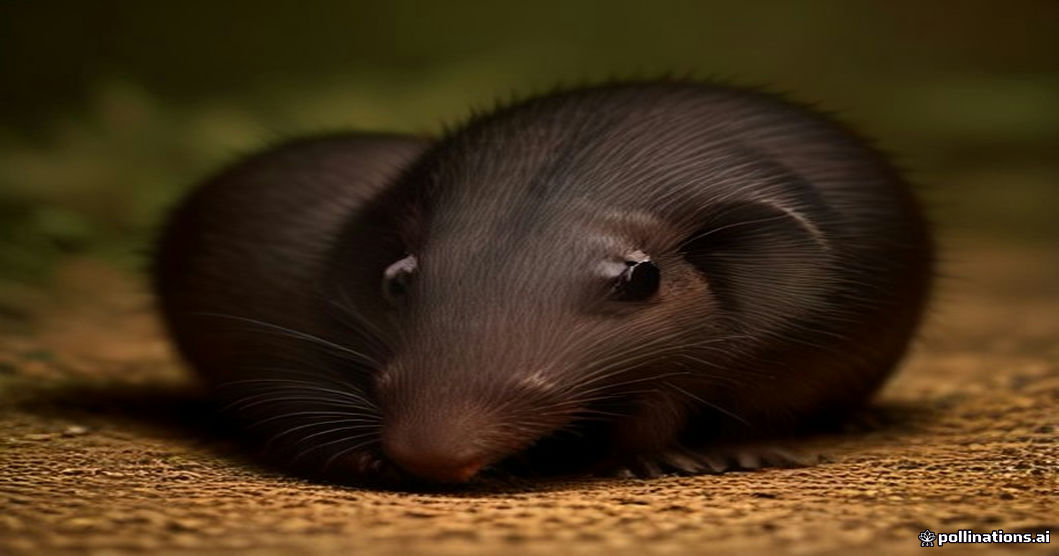
Introduction to Peters’s Elephant Shrew
As a veterinarian and pet care expert, I am always fascinated by the incredible diversity of the animal kingdom. Among the most intriguing small mammals is Peters’s Elephant Shrew (Rhynchocyon petersi), a unique creature native to the lush forests of Kenya, northeastern Tanzania, and nearby islands such as Zanzibar and Mafia.
Size and Physical Characteristics
While many of its cousins in the family Macroscelididae are tiny, measuring a mere 10-12 cm and weighing between 40-50 grams, Peters’s elephant shrew is a true giant among its kind. This remarkable species can reach impressive lengths of 22 to 30 cm and tip the scales at up to 500 grams, giving it a robust presence despite its small stature.
Unique Behavioral Traits
Behaviorally, these animals stand out from other elephant shrews. Rather than simply utilizing whatever random shelter happens to be available in their environment, Peters’s elephant shrews actively construct dedicated nests. They meticulously gather plant material to line shallow depressions in the ground or occasionally dig shallow burrows to protect themselves from predators and the elements.
Evolutionary Mystery and Modern Classification
The evolutionary history of the elephant shrew has long puzzled scientists. Over the years, taxonomists have classified them in various ways—ranging from traditional insectivores and distant relatives of ungulates to being grouped alongside tree shrews and lagomorphs. However, modern molecular research has finally brought clarity. Today, they are officially recognized as members of the superorder Afrotheria, placing them in the same overarching evolutionary branch as tenrecs, golden moles, aardvarks, manatees, hyraxes, and surprisingly, elephants!
Written by Mohammed Murtaja
Editor-in-Chief & Executive Publisher of ZooPulse. Senior investigative journalist directing evidence-based research, veterinary science verification, and editorial governance.
Related Stories
 Africa
King of the Canopy: The Apex Predator and Incredible Strength of the African Crowned Eagle
Introduction to the African Crowned Eagle The Crowned Eagle (Stephanoaetus coronatus) stands as one of the most magnificent and formidable birds of prey inhabiting the tropical regions of Africa south of the Sahara. As the sole surviving member of its genus, this majestic raptor represents a unique lineage of evolutionary prowess. Its historical counterpart, the […]
 Africa
Desert Sands and Salty Breezes: A Veterinarian’s Guide to Road Tripping Namibia with Your Pet
The Allure of the Namibian Coast Imagine a landscape where the towering, apricot-colored dunes of the Namib Desert crash directly into the cold, turquoise waves of the Atlantic Ocean. This is the reality of a road trip along Namibia’s coastline. For the adventurous pet owner, this journey offers unparalleled beauty, but as a veterinarian, I […]
 Africa
The Ghost of the Congo: Exploring the Secretive Life of the African Golden Cat (Caracal aurata)
Introduction to Africa’s Most Elusive Forest Felid Deep within the dense canopy of Equatorial Africa’s tropical rainforests roams one of the most enigmatic carnivores on Earth: the African golden cat (Caracal aurata). Ranging from Senegal in the west to southern Kenya in the east, and southward to northern Angola, this solitary predator finds its primary […]