When Wildlife Meets Urban Decor: The Curious Case of the Raccoon and the Fire Hydrant
A Hilarious Urban Encounter As a veterinarian and pet care expert, I often get asked about bizarre animal behaviors. However, nothing quite compares to the viral phenomenon of a wild raccoon attempting to intimidate a completely inanimate fire hydrant. In this amusing viral video, we see a nocturnal urban dweller puffing up its fur, hissing, […]
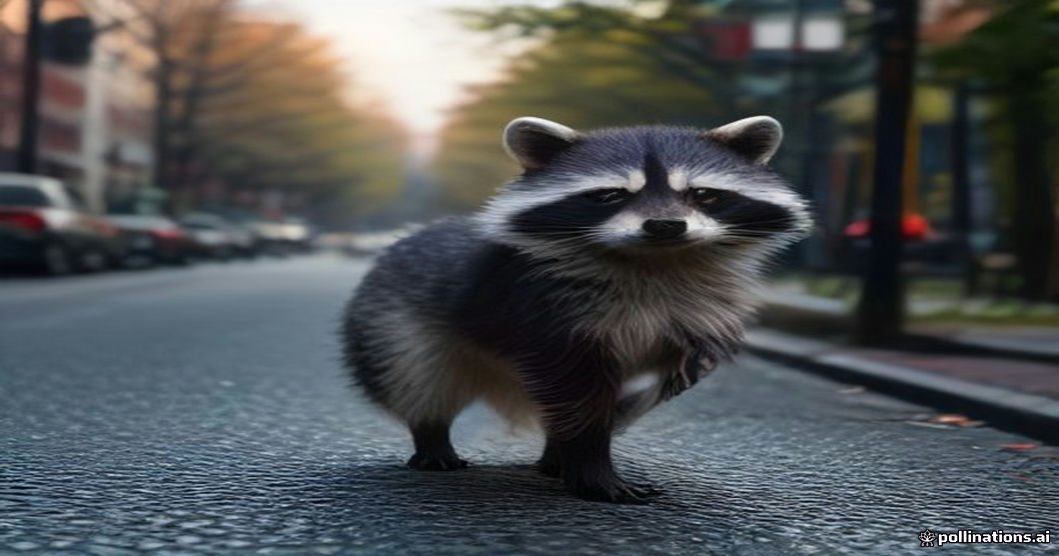
A Hilarious Urban Encounter
As a veterinarian and pet care expert, I often get asked about bizarre animal behaviors. However, nothing quite compares to the viral phenomenon of a wild raccoon attempting to intimidate a completely inanimate fire hydrant. In this amusing viral video, we see a nocturnal urban dweller puffing up its fur, hissing, and circling a bright red hydrant, entirely convinced it has encountered a dangerous rival.
Understanding Raccoon Psychology and Posture
To the casual observer, this behavior seems utterly comical. But from an ethological perspective—the scientific study of animal behavior—it makes complete sense. Raccoons (Procyon lotor) are highly intelligent, adaptable mammals that frequently share our urban and suburban spaces. When faced with an unfamiliar object, especially one with a silhouette that vaguely resembles a crouching animal or a strange predator, their primary survival instinct is caution.
The Threat Display: Fact and Fiction
In the video, the raccoon adopts a classic defensive threat display: arched back, bristled fur, and vocalizations. This evolutionary tactic is designed to make the animal look significantly larger and more intimidating to a potential threat. Because raccoons have relatively poor long-distance eyesight, this red metal cylinder likely registered in the raccoon’s brain as a potential predator or an intruder trespassing on its foraging territory.
Living Alongside Urban Wildlife
While watching a raccoon pick a fight with a piece of municipal infrastructure provides a good laugh, it also serves as a reminder of how closely our lives intersect with local wildlife. Raccoons are remarkably adept at navigating our concrete jungles. As pet owners and animal lovers, it is crucial to secure our outdoor spaces—such as garbage cans and pet food bowls—to prevent these resourceful critters from becoming too comfortable near our homes, ensuring both human and animal safety.
Written by Mohammed Murtaja
Editor-in-Chief & Executive Publisher of ZooPulse. Senior investigative journalist directing evidence-based research, veterinary science verification, and editorial governance.
Related Stories
 Wildlife
Unveiling the Secrets of the Oedipus Tamarin: A Marvel of the Colombian Rainforest
Introduction to the Oedipus Tamarin As a veterinarian and passionate wildlife advocate, I am always fascinated by the incredible diversity of our planet’s primate species. Among the most charismatic and unique is the Oedipus Tamarin (Saguinus oedipus), also widely known as the cotton-top marmoset or ‘pince’. Native exclusively to the tropical rainforests and dry forests […]
 Wildlife
Unveiling the Bathysaurus ferox: The Apex Predator of the Abyss
Introduction to the Deep-Sea Monster In the pitch-black, freezing depths of the world’s warm oceans lies a creature straight out of a prehistoric nightmare. The Bathysaurus ferox, aptly named for its dinosaur-like appearance and ferocious hunting style, is one of the most fascinating and intimidating predators inhabiting the benthic zone of our planet. Anatomy and […]
 Wildlife
Saving the Ghost of the Iberian Peninsula: The Inspiring Story of the World’s Most Endangered Feline
Introduction to the Iberian Lynx As a veterinarian and passionate wildlife advocate, few creatures fascinate me quite as much as the Iberian lynx (Lynx pardinus). Renowned as one of the most endangered cat species on Earth, this magnificent feline is an emblem of Mediterranean wilderness and a testament to the fragile balance of our ecosystems. […]