
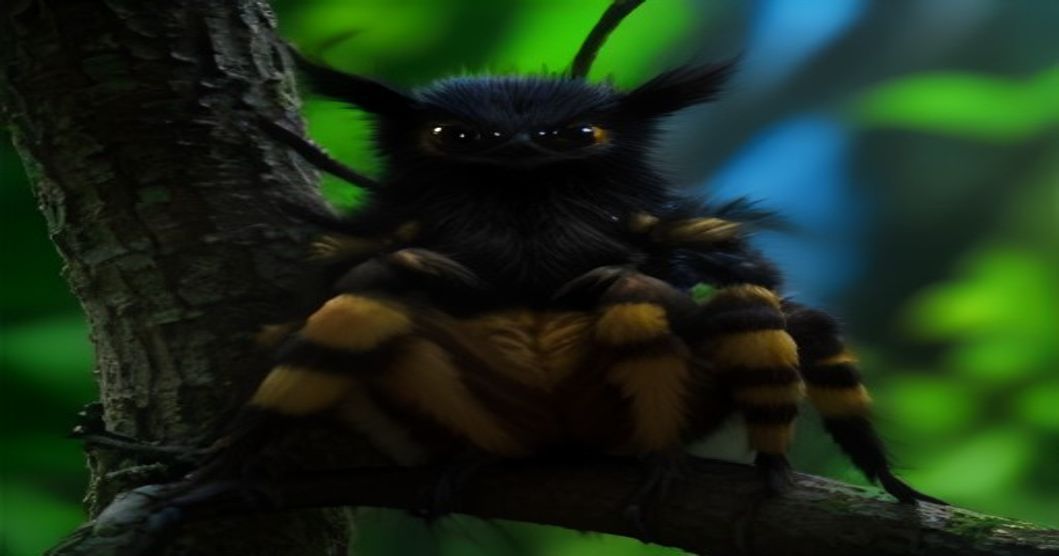
When exploring the fascinating world of exotic arachnids, few species capture the imagination quite like the Brazilian Jewel Tarantula (Typhochlaena seladonia). As a professional veterinarian and pet care expert, I am often amazed by the incredible diversity of invertebrate species, but this tiny arboreal wonder truly stands out as a masterpiece of nature.
An Arboreal Master of Camouflage
This fascinating tree-dwelling spider has evolved a unique way of life high above the forest floor. Unlike ground-dwelling tarantulas, the Brazilian Jewel Tarantula builds its intricate home directly under loose tree bark. Ingenious architects, they construct a silky retreat complete with a functional “trapdoor.” From this hidden vantage point, they patiently wait before pouncing on unsuspecting prey that ventures too close to their domain.
Dwarf Sized with Stunning Iridescence
As you can see, these spiders are quite small compared to their more robust cousins. Adult males typically measure between 3 to 4 cm, while females reach a slightly larger 4 to 6 cm, including their leg span. Despite their diminutive stature, their visual impact is immense. Known aptly as the Brazilian Jewel Tarantula, their stunning coloration makes them truly unique in the arachnid kingdom. Their mesmerizing hues can include striking contrasts of black, electric blue, vibrant yellow, brilliant red, and soft pink. Adorned with iridescent, two-toned legs, many enthusiasts and experts consider them to be the most beautiful spiders in the world.
Diet and Natural History
Despite the traditional family moniker of “bird-eating spiders,” these miniature tarantulas do not actually eat birds. Instead, their diet in the wild consists primarily of small insects suited to their tiny stature. The term “tarantula” simply reflects their taxonomic family relation rather than their dietary habits.
The Purpose of Perfection: A Warning to Predators
While their striking appearance is a treat for the eyes, it serves a crucial survival purpose in the wild. The vibrant and contrasting colors of the Brazilian Jewel Tarantula act as aposematic coloration—a natural warning signal to potential predators that they possess defensive toxins and are thoroughly unpalatable. For keepers and admirers alike, understanding these natural defenses is key to appreciating the delicate ecology of such a breathtaking species.