
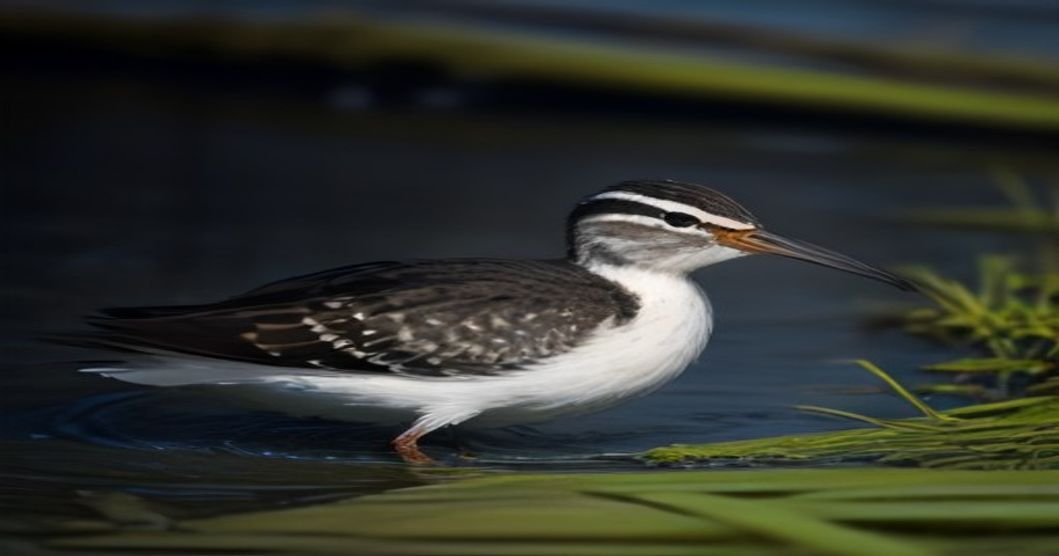
Introduction to the Jack Snipe
The Jack Snipe’s dance is a truly fascinating sight in the avian world! As a professional veterinarian and wildlife observer, I am always captivated by how specialized anatomical features dictate an animal’s survival and behavior. In the case of the Jack Snipe, specialized nerve endings located at the tip of its sensitive beak allow it to detect even the slightest underground movements. Once an earthworm senses the subtle vibrations, its fate is sealed.
Physical Characteristics and Identification
The Jack Snipe is a remarkably compact bird, typically measuring 17 to 19 cm in length with a wingspan ranging from 30 to 36 cm. Weighing in between 40 and 70 grams, it is noticeably smaller than its relative, the Common Snipe. One of its most distinctive features is the striking yellow stripes running down its back, which easily evokes the appearance of a chipmunk and serves as a brilliant form of natural camouflage.
Habitat and Migratory Patterns
During the warm summer months, Jack Snipes make their homes in lush wetlands, nesting across vast regions from Scandinavia all the way to Eastern Siberia. As the seasons change and winter approaches, these resilient birds embark on remarkable migrations to more temperate climates, including Europe, tropical Africa, India, and the Middle East, where they seek out similar wetland environments.
Behavior and Evasion Tactics
When it comes to evading predators, the Jack Snipe relies heavily on stealth. These birds are adept at hiding in dense vegetation, and if threatened while on the ground, they will often remain completely motionless to avoid detection. However, in the autumn months, a startled Jack Snipe might suddenly take flight right from under your feet. Its flight pattern is notably swift and bat-like, carrying it a short distance before it quickly touches down and vanishes into the cover once again.
Diet and Foraging Habits
As dedicated foragers, Jack Snipes primarily feed on a diet consisting of small invertebrates and various seeds found directly on or just beneath the ground. Their specialized foraging techniques ensure they can thrive across their diverse migratory range, maintaining their health and vitality through every season.