
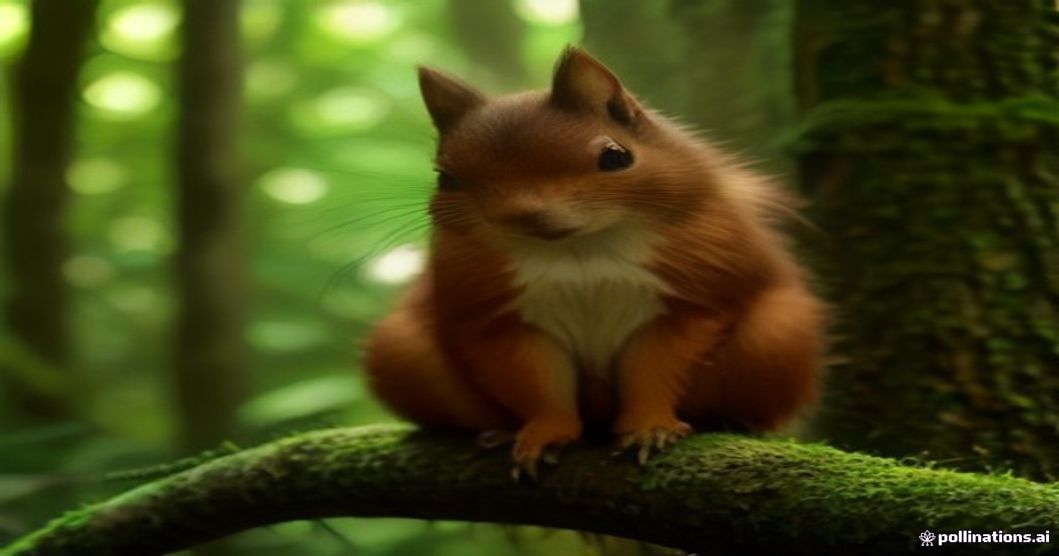
The Eurasian red squirrel (Sciurus vulgaris) is one of the most charismatic and recognizable small mammals native to European and Northern Asian forests. Known for their distinctive rust-red coats, bushy tails, and tufted ears, these arboreal acrobats play a vital ecological role in forest regeneration through seed dispersal.
Habitat and Natural Behavior
Red squirrels primarily inhabit coniferous and broad-leaved woodlands. They spend the vast majority of their lives in the trees, constructing spherical nests known as dreys high up in the branches using twigs, moss, and leaves. Unlike hibernating mammals, red squirrels remain active throughout the winter, relying on stored caches of nuts and seeds buried during the autumn months.
Diet and Nutritional Needs
In the wild, the diet of the Eurasian red squirrel consists mainly of tree seeds, particularly pine cones, hazelnuts, and acorns. They also supplement their nutritional intake with fungi, berries, bark, and occasionally insects or bird eggs. Their strong, chisel-like incisors allow them to efficiently crack open hard shells to access nutrient-dense kernels.
Conservation Status and Threats
In many parts of its range, particularly in the United Kingdom and Ireland, the Eurasian red squirrel population has faced severe declines. The primary drivers of this decline include habitat fragmentation, deforestation, and the introduction of the non-native Eastern gray squirrel (Sciurus carolinensis). Gray squirrels outcompete red squirrels for food and habitat resources and also act as carriers of the squirrelpox virus, which is nearly always fatal to red squirrels.
Wildlife Conservation and Support
Conservation efforts for the Eurasian red squirrel focus heavily on habitat preservation, woodland management to favor native tree species, and controlling invasive gray squirrel populations. Gardeners and landowners living within red squirrel ranges can also help by providing safe supplementary feeding stations stocked with suitable foods like hazelnuts, walnuts, and sunflower seeds, while ensuring feeders are kept clean to prevent disease transmission.