
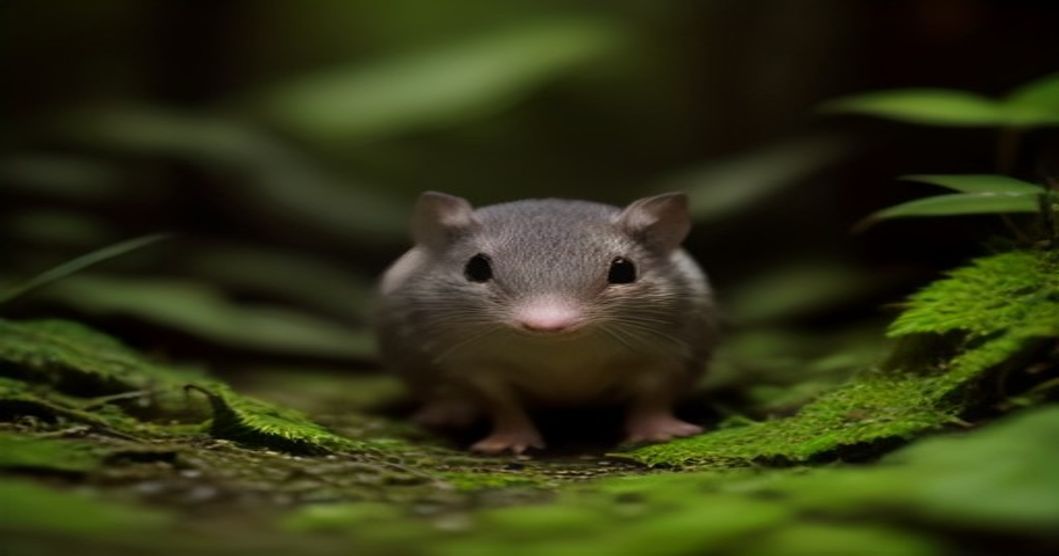
When exploring gardens or woodlands, people frequently spot small, energetic creatures darting through the undergrowth and assume they are field mice. However, a closer look reveals one of nature’s most extraordinary mammalian success stories: the shrew. With a staggering global population estimated at over 100 billion individuals, members of the family Soricidae thrive in almost every terrestrial habitat on Earth. Despite their mouse-like appearance, shrews are not rodents at all, but highly specialized insectivores possessing remarkable evolutionary adaptations.
Mistaken Identity: Why Shrews Are Not Mice
Although they share a superficial resemblance to small rodents, shrews belong to an entirely different biological order. Unlike mice and rats, which are rodents equipped with prominent, continuously growing incisors designed for gnawing, shrews possess rows of sharp, specialized teeth tailored for catching and crushing invertebrate prey. They are characterized by elongated, flexible snouts, tiny eyes, and velvety fur. Recognizing the distinction between rodents and shrews is essential, as shrews act as natural pest control agents in ecosystems rather than grain-eating pests.
A Burning Engine: The Extreme Shrew Metabolism
Perhaps the most mind-boggling aspect of shrew biology is their incomprehensible metabolic rate. A shrew’s heart can beat up to 1,200 times per minute. To fuel this internal furnace, a shrew must consume between 1.5 to 2 times its own body weight in food every single day—and in some circumstances, even more. This extreme energy demand forces shrews into a state of nearly continuous foraging, punctuated only by brief periods of shallow sleep.
Because their energy reserves are virtually non-existent, starvation is an ever-present threat. A shrew deprived of food can succumb to hypoglycemia and rapid organ failure in a shockingly short period. Smaller species may perish in just 7 to 9 hours without nourishment, while the lesser shrew (Sorex minutus) can starve to death in as little as 5.5 hours. This relentless drive to eat makes them ferocious predators relative to their size.
Unique Adaptations: Caravans, Venom, and Echolocation
Beyond their incredible appetite, shrews display behaviors and biological traits that are exceedingly rare among mammals:
Caravanning Behavior: One of the most charming sights in the animal kingdom occurs when a mother shrew moves her young. To avoid getting lost while exploring or changing nests, the juvenile shrews form a train-like procession. The first offspring bites onto the base of the mother’s tail, and each subsequent sibling bites onto the tail of the young shrew in front of it, creating an unbroken human-style chain as they move through the leaf litter.
Venomous Saliva: A few shrew species, such as the northern short-tailed shrew, are among the very few venomous mammals on the planet. Their saliva contains a potent neurotoxin that paralyzes small prey, allowing the shrew to store living insects and worms in subterranean larders for later consumption.
Primitive Echolocation: Certain shrew species navigate their dark, underground burrows and dense foliage using high-frequency clicks. While not as sophisticated as bat echolocation, this crude biosonar helps them map out their immediate surroundings in total darkness.
Nature’s Micro-Predators
Shrews are evolutionary masterpieces designed for high-efficiency hunting in miniature form. While their brief life spans and constant need for food make their lives an intense race against time, their sheer abundance and biological diversity prove that you don’t need to be big to be one of the planet’s most triumphant animals.