
Introduction to the Southern Ground Hornbill
As a veterinarian and avian care specialist, encountering species that capture the true essence of prehistoric majesty is always awe-inspiring. The Southern Ground Hornbill (Bucorvus leadbeateri) stands out as a true marvel of the African savannah. Renowned as the largest hornbill species in the world, these magnificent birds command attention not only through their impressive physical stature but also via their unique behavioral and anatomical adaptations.
Physical Characteristics and Anatomy
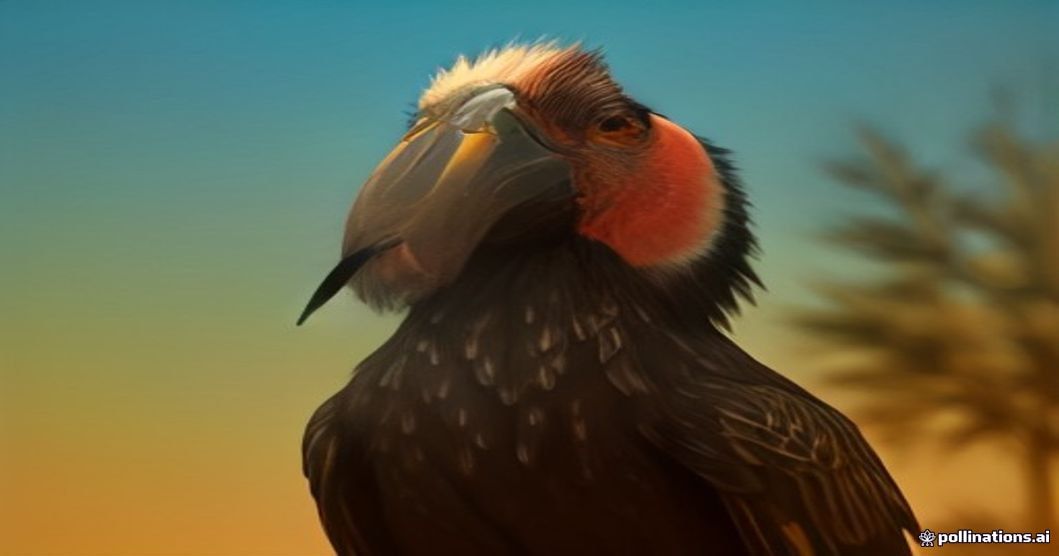
Native to the sub-equatorial regions of the African savannah, these birds are striking in appearance. A mature Southern Ground Hornbill measures an impressive 90 to 130 cm in length and tips the scales between 3.2 and 6.2 kg. Their sleek, predominantly black plumage provides a stark and dramatic contrast against the vibrant, bare red skin patches that adorn their faces and necks. Both males and females feature a strong, straight black beak equipped with a casque, though this structure is notably more prominent in males, serving as a secondary sexual characteristic.
Adaptations for a Terrestrial Lifestyle
Unlike many of their arboreal cousins, Southern Ground Hornbills spend the vast majority of their lives firmly planted on the ground. They slowly roam the savannah landscapes in family groups, systematically searching for prey. While they are fully capable of flight, they are remarkably adept runners. To support this terrestrial lifestyle, evolution has gifted them with a relatively short tail and long, remarkably strong legs ending in shortened toes designed for efficient walking.
Fascinating Evolutionary Features
One of the most biologically fascinating features of the Southern Ground Hornbill is its specialized visual protection. While foraging through tall, abrasive savannah grasses, their eyes are constantly at risk of injury. To combat this, they possess luxurious, long black eyelashes. Not only do these specialized feathers protect their sensitive eyes from the harsh environment, but they also create a striking aesthetic contrast against the extensive circle of bright red bare skin surrounding their eyes.
Conservation and Veterinary Care Perspective
From an animal health and conservation standpoint, understanding the specialized needs of ground-dwelling avian giants is vital. Their complex social structures, slow reproductive rates, and specific foraging requirements mean that habitat preservation is critical for their survival. As these iconic sentinels of the African plains face ongoing environmental pressures, continued dedication to their research and habitat protection remains essential for future generations.