
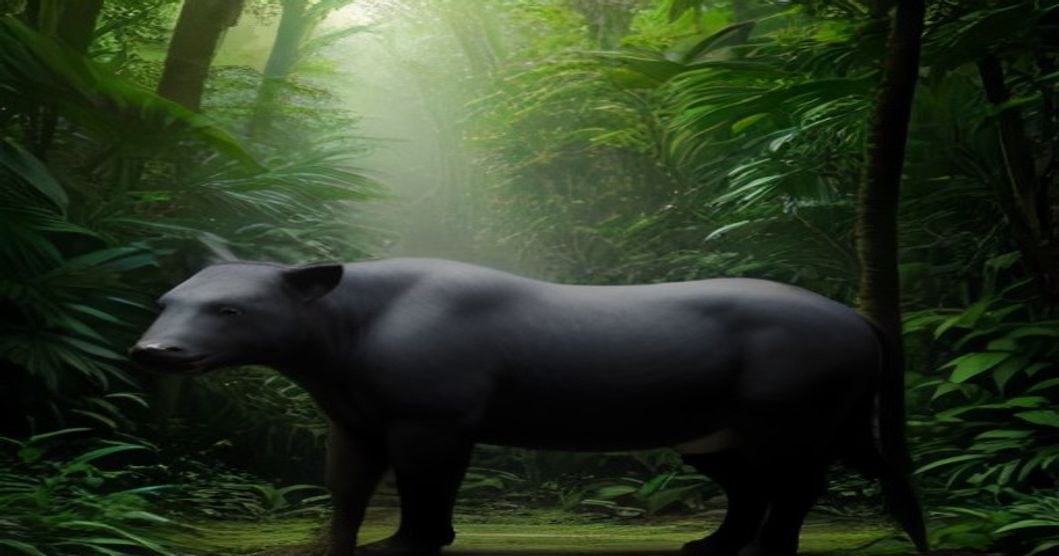
Introduction to an Ancient Survivor
As a veterinarian and wildlife health expert, I am always fascinated by species that have withstood the test of time. The Malayan Tapir (Tapirus indicus) is a truly remarkable ancient animal that has existed on our planet for an astonishing 30 million years. While its prehistoric ancestors once roamed the landscapes of Europe, North America, and China, modern tapirs are primarily recognized in Central and South America—with one magnificent exception.
The Unique Asian Tapir
The Malayan tapir stands out as the only Asian species of its family. In Thailand, locals affectionately call it “p’somm-sett,” which translates to “mixture.” This whimsical name reflects its unique physical characteristics: it features three-toed hind legs, four-toed front legs, and horse-like calluses that highlight its fascinating evolutionary adaptations.
Distinctive Markings and Morphology
You can easily recognize a Malayan tapir by its large, grayish-white saddle-like marking spanning its back and sides. This striking coloration is not just for show; it serves as brilliant camouflage, helping the animal break up its outline and blend seamlessly into the deep shadows of the forest. Interestingly, baby tapirs are born with a completely different camouflage pattern of stripes and spots, which gradually fades away by the time they reach 4 to 7 months of age.
Size and Physical Stature
When it comes to sheer size, these gentle giants are impressive. A typical adult tapir boasts a body length of 1.9 to 2.5 meters, a shoulder height of 0.8 to 1 meter, and a healthy weight ranging between 245 and 330 kilograms. Exceptional individuals can even reach up to a massive 500 kilograms!
Behavioral Insights and Adaptability
From a behavioral standpoint, tapirs possess surprising intelligence. A fun fact for animal enthusiasts is that, much like domestic pigs, tapirs adapt remarkably well to human care in captivity and display a high capacity for understanding humans. Protecting and understanding these incredible creatures remains vital for ongoing conservation efforts.