
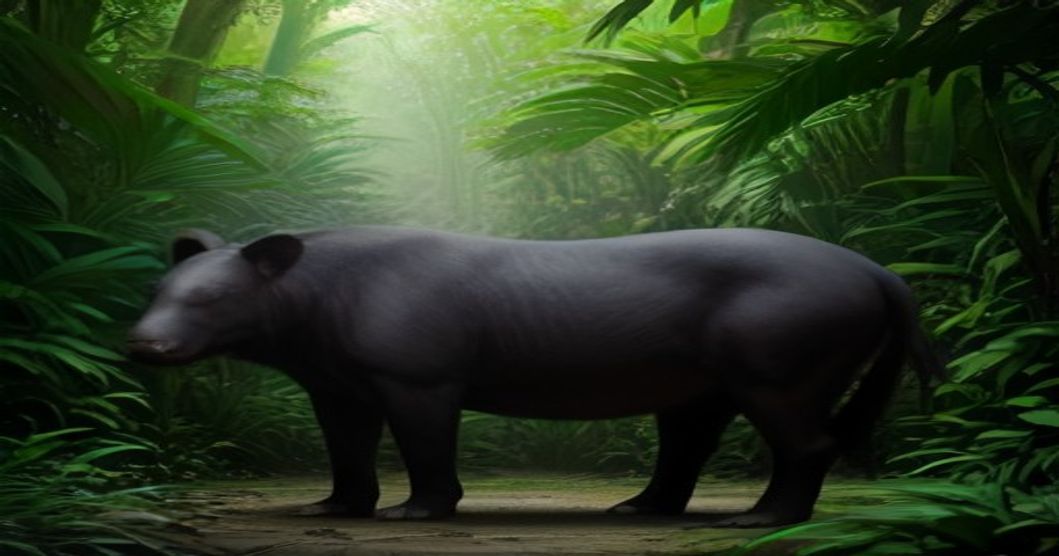
An Ancient Legacy
As a veterinarian and wildlife enthusiast, I am always fascinated by species that have withstood the test of time. The Malayan Tapir (Tapirus indicus) is a true living fossil, belonging to an ancient lineage that has existed for over 30 million years. While their prehistoric ancestors once roamed freely across Europe, North America, and China, modern tapirs are a rare and precious sight, with the Malayan tapir standing out as the only Asian species.
Unique Anatomy and Distinctive Markings
In Thailand, this remarkable creature is affectionately known as “p’somm-sett,” which translates to “mixture”—a fitting name given its unusual physical traits. Tapirs feature three-toed hind legs and four-toed front legs, complete with horse-like calluses that hint at their evolutionary connections to horses and rhinoceroses. You can easily recognize a mature Malayan tapir by its striking grayish-white saddle-like marking across its back and sides, a natural camouflage that helps it blend seamlessly into the deep shadows of the forest. Interestingly, newborns start life with a completely different camouflage: a watermelon-like pattern of stripes and spots that gradually fades by the time they reach 4 to 7 months of age.
Size and Adaptability
Ranking as the largest of the world’s tapir species, these gentle giants typically measure 1.9 to 2.5 meters in body length, stand between 0.8 and 1 meter tall, and usually weigh between 245 and 330 kilograms, though exceptional individuals can reach up to a remarkable 500 kilograms. Beyond their impressive size, tapirs possess surprising intelligence. Much like domestic pigs, they adapt remarkably well to human care, showing a high capacity for learning and understanding humans in captivity.