
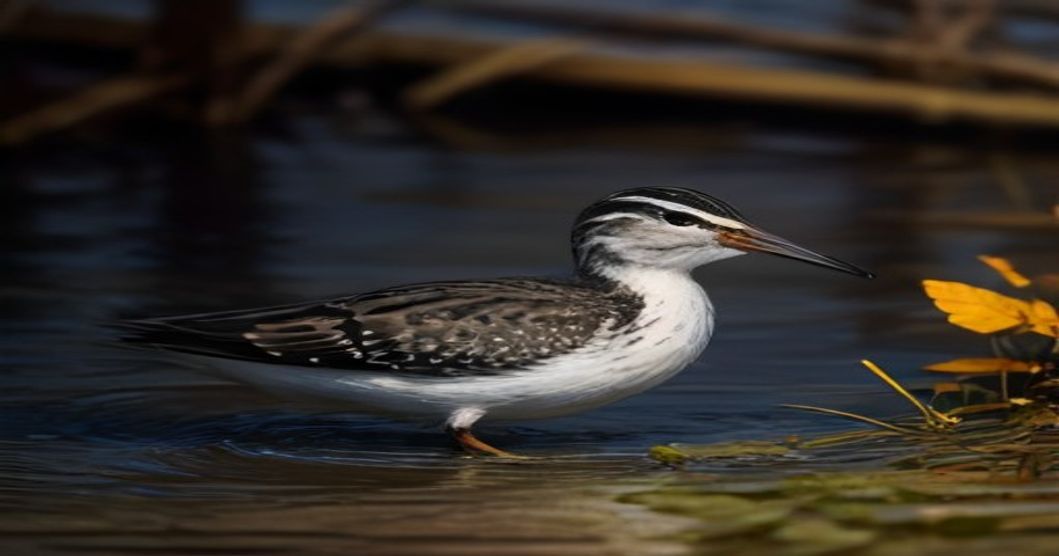
Introduction to the Jack Snipe
The Jack Snipe’s dance is a truly fascinating sight in the natural world! This small yet remarkable bird possesses specialized nerve endings at the tip of its beak that can detect even the slightest movements underground. Once an unsuspecting earthworm senses the subtle vibrations, its fate is sealed.
Physical Characteristics and Identification
As a compact species, the Jack Snipe measures between 17 and 19 cm in length, boasts a wingspan of 30 to 36 cm, and typically weighs from 40 to 70 grams. It is noticeably smaller than its relative, the Common Snipe, and features distinctive yellow stripes running down its back, reminiscent of the markings on a chipmunk.
Habitat, Distribution, and Migration
During the warm summer months, Jack Snipes breed and nest in the tranquil wetlands stretching from Scandinavia all the way to Eastern Siberia. When winter approaches, these resilient birds embark on long migrations to suitable habitats across Europe, tropical Africa, India, and the Middle East.
Behavior and Defense Mechanisms
These secretive birds prefer to hide within dense vegetation. If they feel threatened while on the ground, their primary defense mechanism is to remain entirely motionless. However, in the autumn, a startled Jack Snipe might suddenly take flight right from under your feet! Its aerial movement is remarkably swift and bat-like before it quickly drops back down to land in cover.
Diet and Foraging Habits
As specialized foragers, Jack Snipes primarily feed on a diet consisting of small invertebrates, including their favored earthworms, as well as various seeds found scattered on the damp ground.