
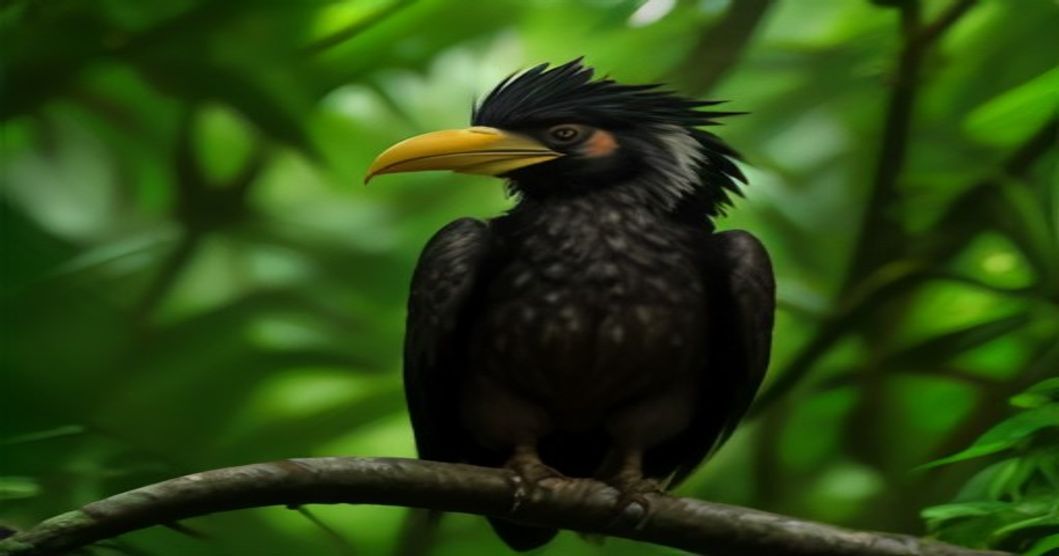
Introduction to the Helmeted Hornbill
The Helmeted Hornbill (Rhinoplax vigil) is one of the most magnificent and extraordinary avian species inhabiting the dense rainforests of the Malay Peninsula, Sumatra, and Borneo. Renowned for its striking appearance and bizarre nesting behaviors, this bird captures the fascination of ornithologists, animal behaviorists, and wildlife enthusiasts alike.
An Astonishing Nesting Strategy
In the heart of the tropical forest, one can occasionally observe a remarkable ritual: a male Helmeted Hornbill diligently feeding fruits to the female, who is safely tucked away incubating their eggs. Once the female selects a suitable tree nest cavity and begins the incubation process, an extraordinary protective behavior takes place. The male meticulously seals her inside the cavity using mud, leaving only a tiny vertical slit just large enough for him to pass food through.
This ingenious evolutionary strategy is primarily designed for safety. By walling the female and the clutch inside, the parents make it extremely difficult for potential egg-predators to detect and access the nest. Later, when the chicks have hatched and grown sufficiently, the male returns to break down the mud barrier, reuniting with his fully grown family. Interestingly, behavioral observations and sources suggest that the female is also fully capable of breaking the mud seal from the inside—a crucial survival contingency in the event that something happens to the foraging male!
The Solid Casque: A Heavyweight Feature
Beyond its nesting habits, the Helmeted Hornbill boasts a truly unique physiological feature. Unlike other hornbill species whose casques (the large helmet-like structure atop their beaks) are hollow and lightweight, the casque of the Helmeted Hornbill is solid keratin. Incredibly heavy, this dense structure accounts for roughly 10% of the bird’s total body weight. While its exact purpose is still studied by avian experts, it is widely believed to play a significant role in vocal resonance and dramatic aerial jousting contests between rival males.
Conservation and Conclusion
As a cornerstone species of Southeast Asian rainforests, the Helmeted Hornbill highlights the incredible diversity and complexity of avian adaptations. Understanding and sharing insights into their biology and reproductive behavior is vital for fostering appreciation and supporting ongoing conservation efforts to protect these majestic creatures from habitat loss and poaching.