
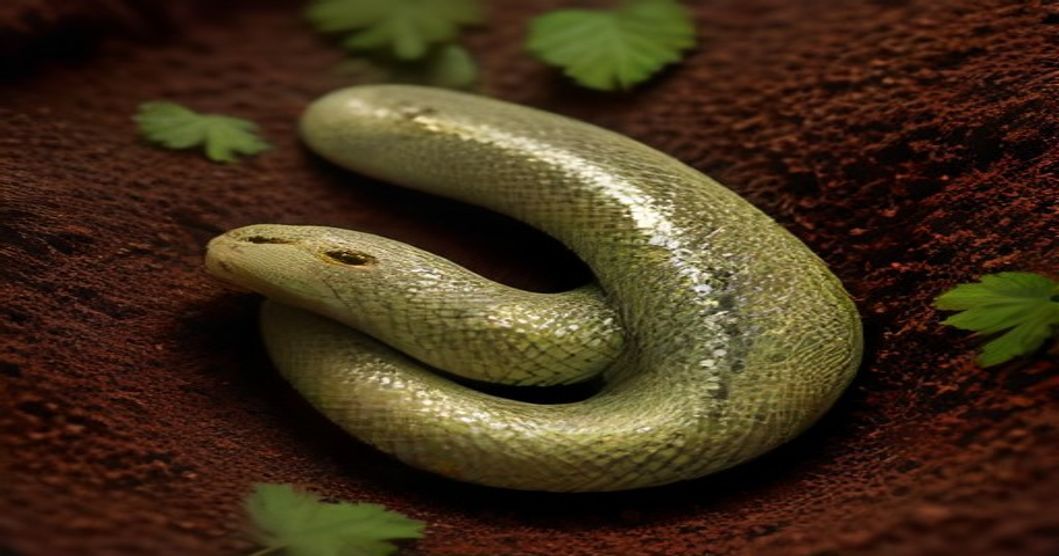
At first glance, you might easily mistake the Texas Blind Snake (Rena dulcis) for an ordinary earthworm. However, a closer inspection reveals a fascinating, highly adapted reptile that plays a unique role in its local ecosystem. Small, smooth, and glossy, this subterranean specialized snake proves that incredible biological marvels often come in tiny packages.
Anatomy and Physical Adaptations
The Texas Blind Snake typically grows between 5 to 11 inches in length. Its cylindrical body is covered in smooth, tightly overlapping scales that give it a shiny, pinkish-brown to silvery appearance. Unlike typical snakes, its eyes are reduced to rudimentary black spots situated beneath protective head scales, perfectly suited for a life spent entirely underground.
Its blunt head and spine-like tip on the tail are specialized tools designed for efficient burrowing through loose soil. Perhaps most importantly, its tough, armor-like scales act as a natural suit of chainmail, shielding the snake from venomous stings and bites when infiltrating aggressive insect colonies.
Diet and Life Underground
As dedicated subterranean hunters, Texas Blind Snakes navigate complex underground tunnels in search of their favorite meal: ant larvae and pupae, as well as termite nymphs. They possess a remarkable chemical and physical resilience that allows them to slide right into the heart of an ant nest.
Because their specialized mouthparts and slick bodies minimize friction and resist attacks, they can comfortably gorge on larvae while surrounding ants struggle in vain to bite through their protective scaling. This specialized diet renders them beneficial natural regulators of insect populations.
Geographic Range and Habitat
This intriguing species is native to the southwestern United States—primarily found in Texas, Oklahoma, Kansas, and New Mexico—as well as northern and central Mexico. They thrive in damp, loose soil, beneath flat stones, fallen logs, and deep leaf litter where moisture levels remain adequate to prevent dehydration.
A Remarkable Symbiosis: Owls and Blind Snakes
One of the most extraordinary ecological relationships involving the Texas Blind Snake is its interaction with screech-owls. Eastern Screech-Owls frequently capture these small snakes and carry them back to their nest boxes alive. Rather than consuming them immediately, the owls leave the snakes inside the nest.
Once inside, the blind snakes burrow through the nesting material, consuming parasites, fly larvae, and mites that would otherwise feed on owl chicks. Studies have shown that owl nestlings raised alongside living Texas Blind Snakes grow faster and experience higher survival rates, demonstrating a remarkable cross-species mutualism.
Ecological Importance
Though rarely seen due to their secretive burrowing habits, Texas Blind Snakes are an invaluable component of healthy ecosystems. By maintaining insect populations and serving as a key player in subterranean food webs, Rena dulcis stands out as a true wonder of the natural world.