
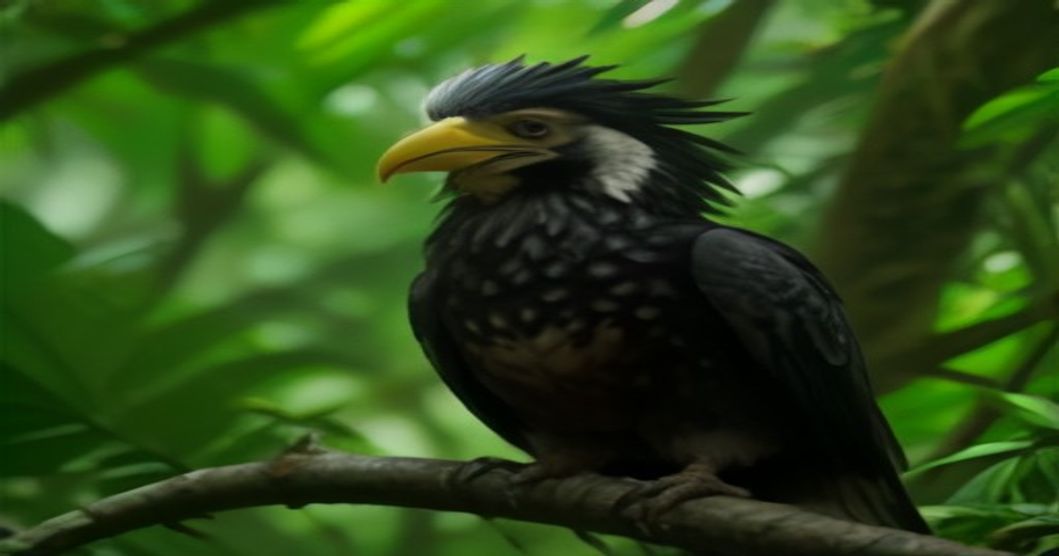
Introduction to the Helmeted Hornbill
The Helmeted Hornbill (Rhinoplax vigil) stands as one of the most magnificent and unique avian species inhabiting the dense rainforests of the Malay Peninsula, Sumatra, and Borneo. Renowned for their striking appearance and fascinating behaviors, these birds play a crucial role in maintaining the health and diversity of their tropical ecosystems.
An Extraordinary Nesting Strategy
One of the most captivating behaviors of the Helmeted Hornbill is its specialized breeding process. Observers can sometimes witness a male hornbill tenderly feeding fruits to the female while she is safely incubating their eggs inside a secure tree cavity. Once the female selects a suitable nest cavity and begins incubation, the male seals her inside using mud, leaving only a tiny vertical opening for passing food. This ingenious evolutionary adaptation provides vital protection, making it exceedingly difficult for egg-predating predators to locate the vulnerable clutch.
Reuniting the Family
As the incubation period concludes and the chicks hatch and grow, the male hornbill actively breaks down the mud barrier to reunite with his family. Interestingly, biological observations and various sources suggest that the female is also capable of breaking the mud seal from the inside—a crucial survival mechanism should any misfortune befall the foraging male.
The Solid Casque: A Unique Feature
Beyond their remarkable nesting habits, Helmeted Hornbills possess a truly distinct anatomical feature. Unlike other hornbill species whose head structures are lightweight and hollow, the Helmeted Hornbill features a solid, incredibly heavy casque atop its beak. This dense structure accounts for approximately 10% of the bird’s total body weight, serving fascinating evolutionary purposes in their dense rainforest habitat.