
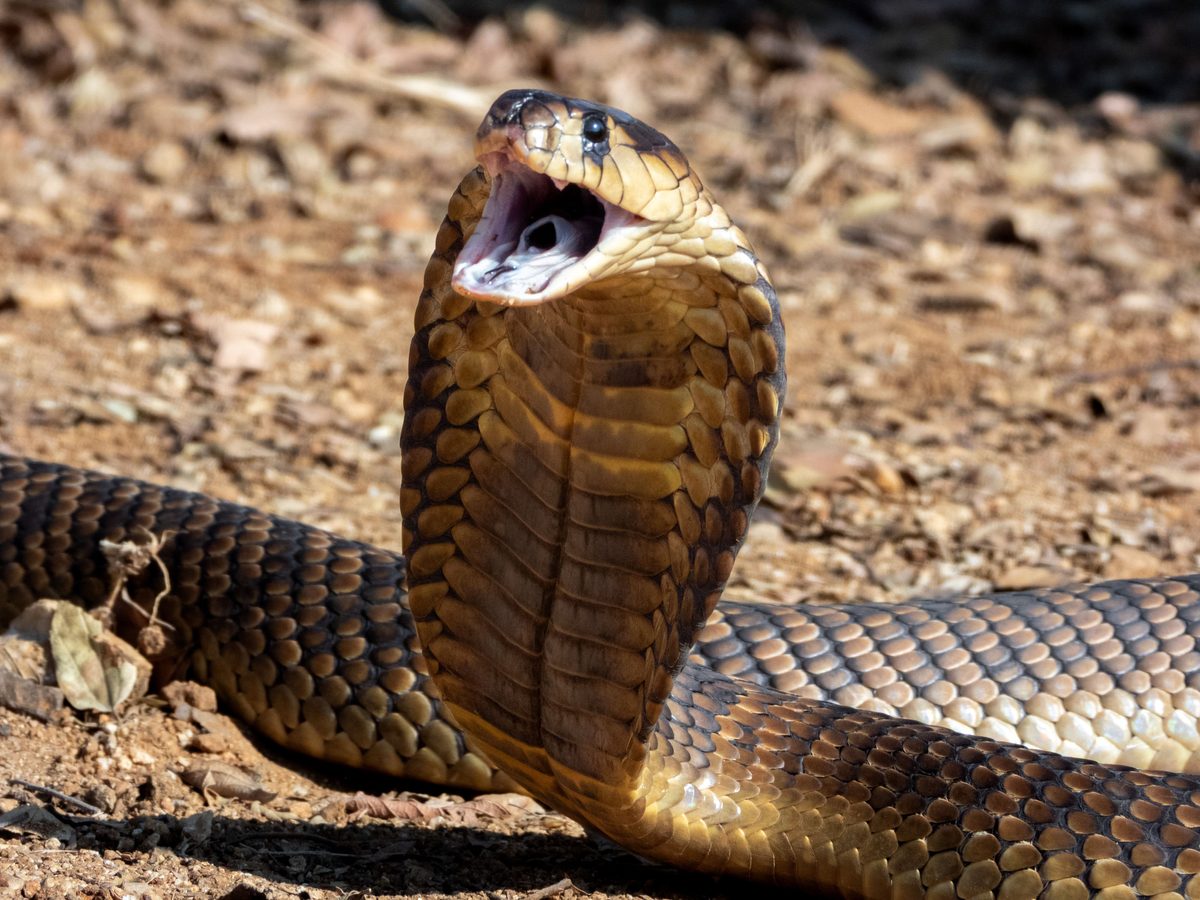
The King of Venom Meets Its Match
The longest-recorded king cobra reached an impressive 5.85 metres, raising a compelling question: what sort of animal would dare to take on one of the planet’s most venomous snakes? While a single bite packs enough toxin to kill more than a dozen people, these showstopping serpents generally prefer dining on other snakes, lizards, eggs, and small mammals.
Inhabiting the rain forests and plains of India, southern China, and Southeast Asia, threatened king cobras rise up to a third of their length and flare their elongated rib cages to form a formidable hood. Despite their fearsome reputation, several audacious creatures actively hunt them.
1. The Feisty Mongoose
As Rudyard Kipling famously portrayed in Rikki-Tikki Tavi, the mongoose is an agile and feisty snake-killer. Some mongoose species actively hunt king cobras with remarkable success, boasting an 80% attack success rate. By dancing around the snake to dodge strikes until the reptile tires, the mongoose delivers a lethal blow to the head. Many species even possess a genetic mutation providing total immunity to the snake’s venom.
2. The Fearless Honey Badger
Don’t be fooled by the sweet name; honey badgers are notoriously bold. These fox-sized carnivores routinely ransack beehives, chase cheetahs, and steal from lions. Venomous snakes make up roughly a quarter of their diet, including king cobras. Equipped with a different genetic mutation than mongooses, honey badgers enjoy partial protection. If bitten by a large venomous snake, a honey badger might temporarily lose consciousness before waking up ready to fight another day.
3. The Reticulated Python
When a king cobra crosses paths with a reticulated python, it is a true clash of the titans. While king cobras rely on specialized hollow fangs to inject venom, non-venomous reticulated pythons are constrictors that squeeze their prey to death. Encounters between the two can go either way. In one gruesome battle, a cobra dealt a fatal bite just as the python squeezed the life out of it, resulting in both snakes dying in a tangled, lifeless mess.
4. The Crested Serpent Eagle
As their name suggests, crested serpent eagles are specialized raptors that feed heavily on snakes, including dangerous species like black mambas and king cobras. Hunting from perches, these medium-sized birds swoop down, grasp prey with their claws, and crush or tear off the head. While they lack innate venom immunity, any venom they ingest is safely broken down in their stomachs.
5. The Saltwater Crocodile
The king cobra may be the world’s longest venomous snake, but it is no match for the armored bulk of the saltwater crocodile. Growing up to 6 metres long and weighing up to 1,000 kg, these apex predators possess a superior bite force, armored hide, and ambush tactics that make short work of any swimming cobra with a few swift chomps.
Cannibalism Among King Cobras
King cobras aren’t sentimental. Researchers have occasionally witnessed these reptiles killing and eating members of their own species. Whether this behavior acts as a form of population control or stems from mating rejections, it remains a fascinating, ruthless aspect of their survival strategy.
The Human Threat
Despite their lethal reputation, king cobras prefer a quiet life and actively avoid humans. Yet, humans remain their greatest threat. Listed by the IUCN as vulnerable to extinction, king cobras face severe pressures from illegal harvesting for skin, food, and medicine, the international pet trade, and widespread habitat loss.