
Killer Instincts in the Animal Kingdom
We rarely think of birds as dangerous, says wildlife expert Dominic Couzens. That is a common misconception; to their prey, feathered creatures can be completely and utterly deadly. While a few species pose a genuine threat to humans today—and even more did back in prehistoric times—others have evolved remarkably clever or brutally efficient ways of hunting and destroying other living things.
The Bone-Crushing Lammergeier
This striking vulture lives in the mountainous regions of Europe, Asia, and parts of Africa, boasting a very peculiar diet consisting almost entirely of bones, particularly marrow. Equipped with an intensely acidic stomach to break down hard calcium, the Lammergeier views a bone much like a tortoise’s carapace. These vultures snatch tortoises in their talons, soar high into the air, and drop them onto rocks below before feasting on the shattered pieces. Brutal, efficient, and entirely effective.
Cassowaries: The Deadly Forest Striders
Cassowaries are the only modern birds officially recorded killing humans in combat in the wild. Found in the dense rainforests of Northern Australia and New Guinea, these large, flightless birds resemble midriff-heavy ostriches and are armed with immensely powerful legs. Their middle toe features a razor-sharp, slightly curved claw measuring up to 12cm. When threatened, a cassowary can leap upward and lash out, delivering fatal wounds. Though rare, attacks do happen—including a tragic 2019 incident in Florida involving a pet cassowary.
Shrikes: The Brutal ‘Butcher Birds’
When it comes to gruesome hunting methods, shrikes have rightfully earned the nickname “Butcher birds.” These predatory songbirds hunt large invertebrates and small vertebrates like other birds using sharp bills and powerfully clawed feet. Their most distinct habit is caching surplus food by impaling it on sharp thorns or barbed wire to consume later—often leaving their prey struggling while strung up in the Larder.
The Mighty Harpy Eagle
As an apex predator of the rainforests in South and Central America, the huge harpy eagle is rare and elusive. Famed for preying on medium-sized mammals like sloths and monkeys, this magnificent raptor features a two-meter wingspan and talons as broad as a grizzly bear’s claws. Though rare, human encounters do occur; in 2023, an adult woman in French Guiana was attacked by a harpy eagle and only survived because her partner pinned the bird down.
The Crafty, Bait-Fishing Green Heron
While most herons patiently wait by the water’s edge for an unsuspecting fish to swim past, the clever green heron has mastered a far more proactive technique. These birds actively gather bait—ranging from leaves, twigs, and bread to insects like mayflies—and drop it onto the water’s surface to lure fish straight to them. It is an impressive display of avian intelligence and lethal precision.
Crowned Eagles and Prehistoric Giants
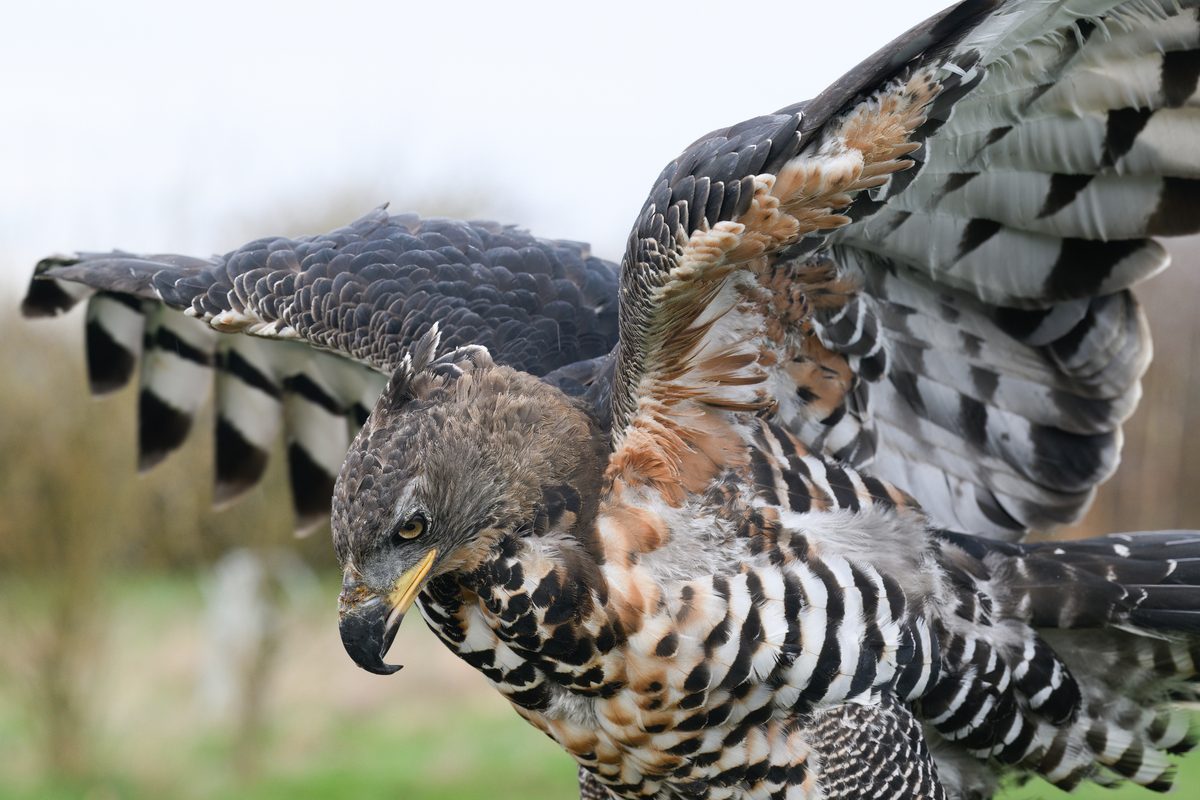
While eagle attacks on humans are vanishingly rare, the widespread African Crowned Eagle is a known occasional predator of children, with authenticated attacks and skeletal remains discovered in nests. Looking back into prehistory, New Zealand’s immense Haast’s eagle was twice the size of a harpy eagle, easily capable of hunting giant, extinct moas—and potentially early humans, too.
Toxic Pitohuis: The Poisonous Songbirds
For a long time, scientists believed toxicity was strictly the domain of reptiles, amphibians, and insects. That changed in the 1990s when researchers handling New Guinean pitohuis noticed a burning, numbing sensation on their lips. Analysis revealed these birds harbor batrachotoxin-like poisons in their feathers—similar to arrow-poison frogs—though the minuscule amounts pose little risk unless added to a high-end Beef Wellington.
The Secretary-Bird: The Serpent’s Nemesis
With long, stilt-like legs and wispy crests, the Secretary-bird looks comically elegant as it strides across the African savanna. To its prey, however, it is a nightmare. Specializing in large invertebrates, rodents, and especially venomous snakes, the Secretary-bird simply stomps and kicks its prey to death with short, heavy-duty claws, or drops them from the sky to finish the job.
The Peregrine Falcon: Aerial Speed Demon
If there is a contender for the world’s most dangerous bird to *other* birds, it has to be the peregrine falcon. Found worldwide, it hunts a massive variety of avian species using its legendary “stoop”—a high-speed hunting dive. Utilizing gravity, the falcon can accelerate to staggering speeds approaching 300 km/h, striking prey with enough force to instantly snap a victim’s neck.
The Vampire Ground-Finch of the Galapagos
It may not be the deadliest bird, but the Vampire Ground-Finch certainly has the weirdest diet. Endemic to remote Galapagos islands and related to Darwin’s famous finches, these birds turn to a gruesome diet during the dry season: they use sharp bills to pierce the skin and drink the blood of nesting seabirds, particularly boobies. While it doesn’t kill the hosts, a swarm of thirsty finches makes for a very irritated colony.