
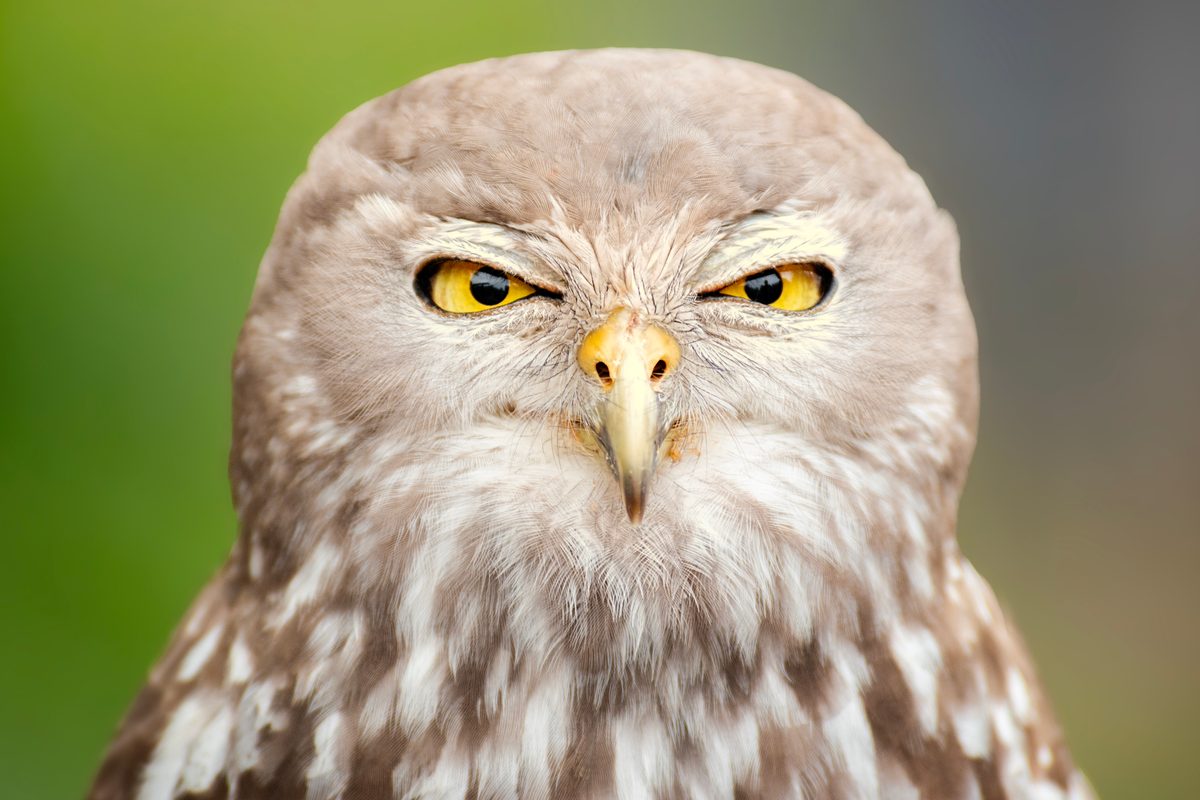
With its striking yellow eyes, compact power, and an unsettling call that echoes through the dark, the barking owl is easily one of Australia’s most memorable and mysterious birds.
A Voice That Inspires Folklore
True to its name, this fascinating raptor is often heard long before it is spotted. Its primary call is a sharp, dog-like double note sounding much like ‘wook-wook’ or ‘woof-woof,’ frequently performed as a duet between males and females. However, its rarer vocalization is far more chilling: a long, wavering scream with an eerily human quality. This haunting sound earned the bird its dramatic local nickname, the ‘screaming-woman bird,’ easily explaining how generations of folklore came to surround it.
Appearance and Versatile Hunting
Measuring between 35 and 45 cm, the barking owl is a medium-sized hawk-owl sporting a rounded grey-brown head, a fierce direct stare, and powerful yellow talons designed for seizing prey. Unlike barn owls, it lacks a distinct heart-shaped facial disc. Instead, its upperparts feature grey-brown plumage with white wing spots, while its heavily streaked underparts are paler.
As a versatile carnivore, its diet ranges from small to medium-sized mammals—such as squirrel gliders and common ringtail possums—to birds, reptiles, and insects. While it typically launches quick ambushes from an exposed perch, it is agile enough to snatch moths directly out of the air.
Behavior, Breeding, and Habitat
While predominantly nocturnal, the barking owl is less strictly bound to the dark than many other owl species. It roosts by day in leafy foliage near watercourses, hunting from late afternoon through the night, and occasionally even ventures out during daylight hours.
Forming long-term pairs that often return to the same nesting hollow year after year, these birds raise a single brood per season during winter and spring. Because they sit high in the food chain, a single pair may claim a territory exceeding 100 hectares to ensure an adequate supply of prey for themselves and their young.
Conservation Challenges
Globally listed as Least Concern, the barking owl’s broad status masks a more fragile reality. While relatively common in northern Australia, populations in the south and east have seen noticeable declines due to habitat loss and agricultural development.
The species relies heavily on old, hollow-bearing trees for nesting and mature woodland for hunting. When these environments are cleared, degraded, or impacted by severe fires, the owls suffer. Compounding these pressures are introduced predators like foxes and feral cats, competition for nesting hollows from feral honey bees, and the ongoing threat of rodenticide poisoning.