
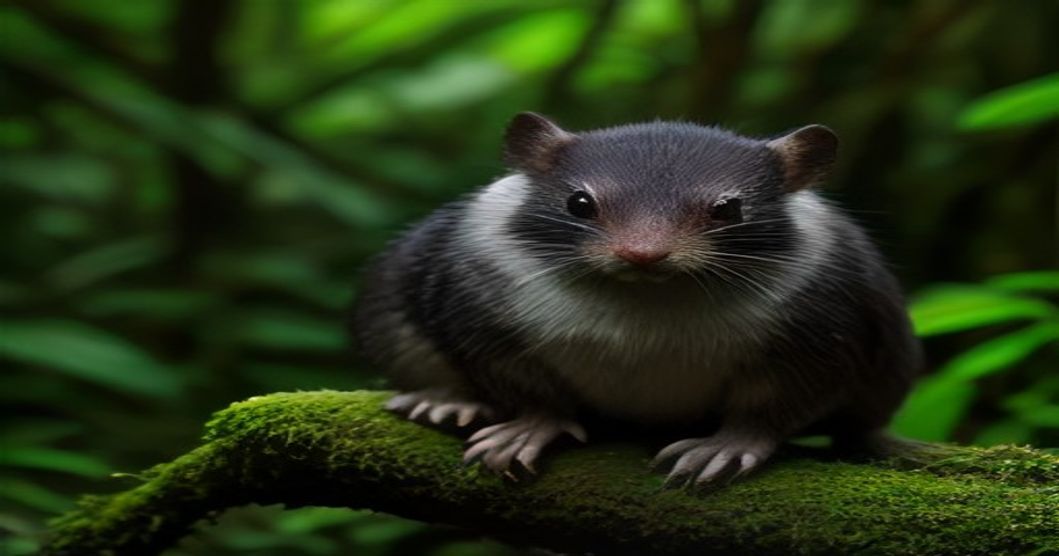
Introduction to the Mysterious Pacarana
As animal care professionals and exotic species enthusiasts, we are constantly fascinated by the incredible diversity of the rodent order. Among the most enigmatic and rare of these mammals is the Pacarana (Dinomys branickii). Ranking as the fifth-largest rodent in the world—trailing only the capybara, beaver, crested porcupine, and mara—this remarkable creature commands our attention. Scientifically, its name tells a compelling story: Dinomys derives from the Greek for “terrible mouse,” while the species name branickii honors the naturalist A. Branicki. Despite its somewhat intimidating scientific moniker, this rare mammal is renowned for its gentle demeanor.
Habitat, Distribution, and Behavior in the Wild
Native to the lush rainforests of South America, the lifestyle of the pacarana remains largely shrouded in mystery due to its elusive nature in the wild. These animals typically inhabit the lower regions of rocky mountain slopes and forested valleys, thriving at altitudes ranging from 200 to 2,000 meters above sea level. Because they are so rarely encountered by humans, field researchers still have much to learn about their daily ecology. Observers note that in their natural habitat, pacaranas exhibit a notably slow, “phlegmatic” pace, moving through their environment with deliberate, unhurried caution.
Temperament in Captivity and Care Insights
For those fortunate enough to work with them in specialized zoological settings, the pacarana presents a starkly different behavioral profile than one might expect from a wild rodent. In captivity, these animals are remarkably calm, non-aggressive, and peaceful. They adapt well to structured environments where their needs are met, making them subjects of great interest for behavioral studies. Providing a tranquil environment, suitable climbing structures, and appropriate gnawing materials are essential for maintaining their psychological and physical well-being.
Reproduction, Family Life, and Early Development
One of the most captivating aspects of pacarana biology is their social structure. Unlike many other rodent species, pacaranas are strictly monogamous. Once they find a life partner, they form a lifelong bond, staying together forever. Their reproductive rate is remarkably slow; pregnancy lasts for an unusually long period of up to eight months, typically culminating in a litter of just two offspring. These young are notably precocious and resilient, showing a strong survival instinct and attempting to eat solid food just a few days after birth, highlighting the species’ evolutionary adaptation to their demanding mountain forest habitats.