
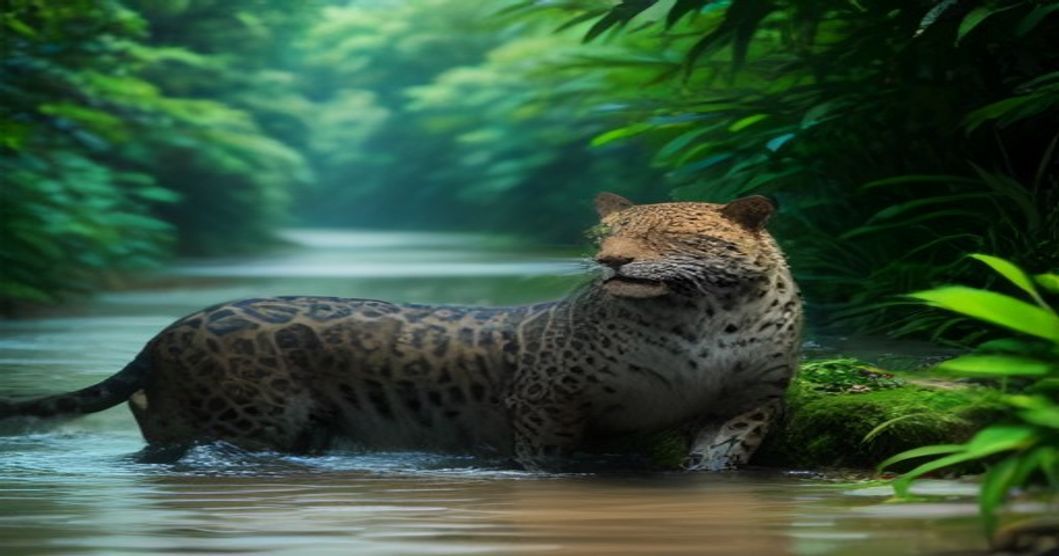
Introduction to the Ultimate South American Apex Predator
As a veterinarian and wildlife health expert, I am endlessly fascinated by the incredible adaptations of the animal kingdom. Among the most formidable is the South American jaguar (Panthera onca). Renowned for their strength and agility, these magnificent big cats are not only exceptional swimmers who thrive in aquatic environments, but they are also apex predators capable of taking down challenging prey—including the fearsome caiman.
A Diverse and Opportunistic Diet
Jaguars are true generalist carnivores, with a diet that encompasses at least 87 different species. Their primary prey includes capybaras, peccaries, and caimans. However, their dietary repertoire is remarkably vast. When the opportunity arises, jaguars will hunt deer, giant anteaters, and tapirs. They are also skilled at catching dangerous snakes such as anacondas, as well as waterfowl and freshwater fish.
Further expanding their menu, jaguars feed on monkeys, foxes, iguanas, opossums, otters, rodents, and coatis. Their hunting prowess even extends to heavily armored animals. Thanks to their uniquely powerful jaws, jaguars routinely hunt freshwater turtles and armadillos, effortlessly overcoming their natural defenses.
Human-Wildlife Conflict and Livestock Depredation
Unlike their cougar counterparts, jaguars frequently target domestic livestock, posing a significant management challenge for South American ranchers, particularly concerning cattle. Interestingly, however, nature has its limits. Asian water buffalo, which have been introduced to South American farms as a profitable and robust alternative to traditional cattle, prove to be too large and formidable, remaining an unattainable prey for the spotted cat.
Veterinary Spotlight: The Ultimate Bite Force
From an anatomical perspective, the jaguar is a masterpiece of evolutionary engineering. Jaguars possess the strongest relative bite force of all big cats. This specialized musculature and cranial structure generate immense pressure, allowing them to pierce turtle shells and crush caiman skulls with astonishing ease. Understanding these powerful predators is vital for both wildlife conservation and managing coexistence with local farming communities.