
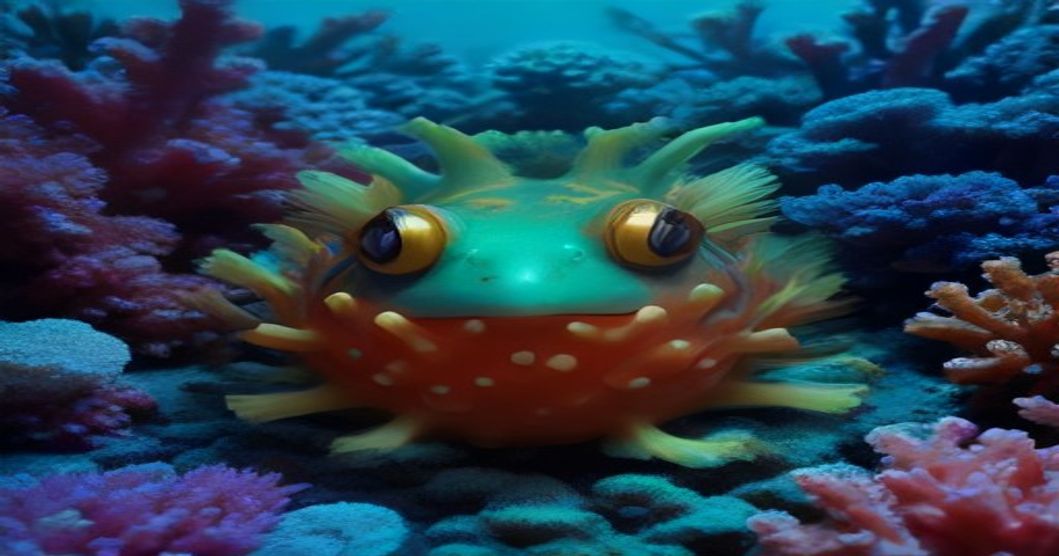
Introduction to the Miniature Predator
When we picture the deep-sea anglerfish, we often imagine the luminous, bulbous creatures of the ocean’s abyss. However, shallow-water species like the painted frogfish, or young anglerfish (Antennarius pictus), introduce us to a remarkably different yet equally fascinating world of marine camouflage and predatory skill.
The Art of Disguise and Ambush Hunting
Despite its diminutive size, the young anglerfish is already a seasoned predator. Utilizing specialized skin pigments and texture adaptations, it blends seamlessly into its coral reef environment, waiting patiently for unsuspecting prey to wander past. This masterclass in stealth is nature’s way of leveling the playing field for such a small creature.
Lightning-Fast Suction Feeding Mechanics
One of the most remarkable physiological traits of the anglerfish—even in its youth—is its method of capture. In a fraction of a second, the young anglerfish can open its mouth to an astonishing width. This rapid movement creates a powerful hydrodynamic suction vortex, rapidly drawing surrounding water and prey directly into its mouth before the target has even a single millisecond to react.
Dual-Purpose Mechanics: Feeding and Respiration
This lightning-fast mouth movement serves more than just a predatory purpose; it is also essential for respiration. As water rushes into the mouth during these expansive movements, it is continuously forced backward and out through the gill slits. This ensures a steady, oxygen-rich water flow across the gills, vital for the high-energy demands of an ambush predator.