
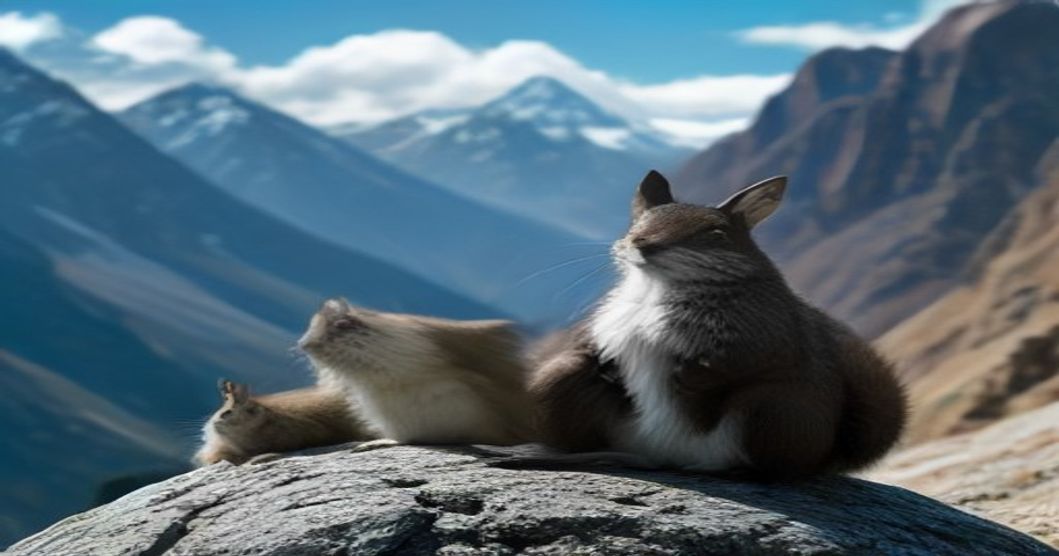
Introduction to the Mountain Viscacha
The Mountain Viscacha, scientifically known as Lagidium viscacia, is a fascinating rodent belonging to the chinchilla family. Native to the rugged landscapes of Argentina, Bolivia, Chile, and Peru, these remarkable creatures have adapted to some of the most extreme environments on Earth.
Habitat and Physical Characteristics
Inhabiting mountainous regions with sparse vegetation, mountain viscachas thrive at breathtaking altitudes ranging from 2,400 to 5,000 meters. Physically, they present a unique appearance that often surprises observers: they closely resemble rabbits, but feature long, squirrel-like tails. An adult viscacha typically reaches a body length of up to 40 cm, with a tail extending an additional 32 cm, and generally weighs between 1.5 and 3 kg.
Behavior and Diet
Viscachas are diurnal animals, showing peak activity levels near dawn and dusk. Their diet consists primarily of tough mountain grasses, mosses, and lichens. Remarkably, they do not require open water sources; instead, they successfully obtain all the hydration they need directly from the plant matter they consume.
Conservation Status and Lifespan
Human activity poses a significant threat to these animals, as they are hunted for both their dense fur and their meat, leading to noticeable population declines in certain areas. In the wild, mountain viscachas face harsh conditions and typically live for only about 3 years. However, with proper veterinary care and a safe environment, captive individuals have been known to live up to 19 years.
Fascinating Adaptation
As a testament to their evolutionary success in arid, high-altitude zones, viscachas possess specialized kidneys. These organs are exceptionally efficient at conserving water, allowing the animals to survive and thrive in environments where moisture is scarce.