
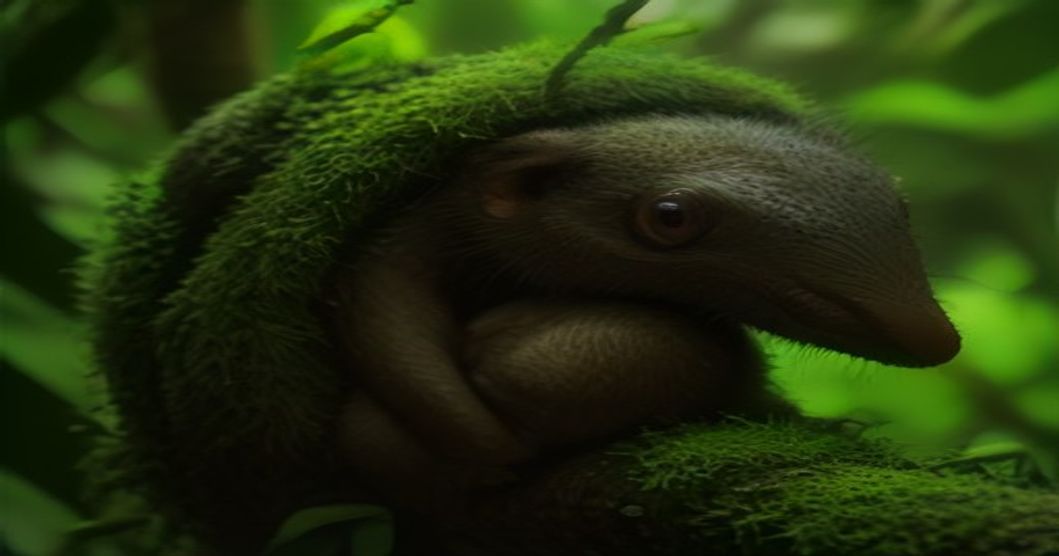
Introduction to the Pygmy Anteater
Deep within the lush tropical rainforests of Central and South America, stretching from southern Mexico down to Brazil, lives one of the most elusive and fascinating creatures in the animal kingdom: the Pygmy Anteater, scientifically known as Cyclopes didactylus. As a veterinary expert and wildlife enthusiast, I am always captivated by how evolution shapes micro-ecosystems, and this tiny mammal is a prime example of nature’s ingenuity.
Size and Physical Characteristics
Often referred to as the two-toed anteater, this miniature marvel is the smallest of all anteater species. Measuring a total length of just 35 to 45 centimeters—with their body accounting for 15 to 25 cm and their tail making up the remaining 15 to 20 cm—they typically weigh up to 400 grams, with the average adult tipping the scales at around 266 grams. Despite their diminutive size, they possess remarkable physical adaptations. They are entirely toothless, relying instead on a specialized, long, and intensely sticky tongue powered by exceptionally strong muscles to capture their prey. Furthermore, they feature a highly specialized prehensile, naked tail that acts as a fifth limb, providing crucial stability as they navigate the complex matrix of tree branches.
Lifestyle and Arboreal Habitat
Pygmy anteaters are strictly nocturnal, choosing to spend their daylight hours curled up securely in the safety of multi-level tropical forests. Their arboreal lifestyle is so specialized that they rarely, if ever, touch the forest floor. By moving exclusively from tree to tree through the canopy branches, they minimize their exposure to ground predators, making their canopy domain a true sanctuary.
Specialized Diet and Nutritional Needs
When it comes to nutrition, these tiny insectivores are voracious eaters. A single pygmy anteater can consume anywhere from 100 to a staggering 8,000 ants per day! Supplementing their primary diet of ants, they also forage for other small arboreal insects, such as beetles. Their elongated snout is uniquely designed to sniff out hidden colonies beneath bark and among epiphytes, ensuring they meet their high metabolic demands.
Conclusion
The pygmy anteater remains a masterclass in specialized wildlife adaptation. From their prehensile tails to their massive daily ant consumption, these pint-sized mammals remind us of the incredible biodiversity thriving in our tropical rainforests and the importance of preserving their delicate arboreal habitats.