
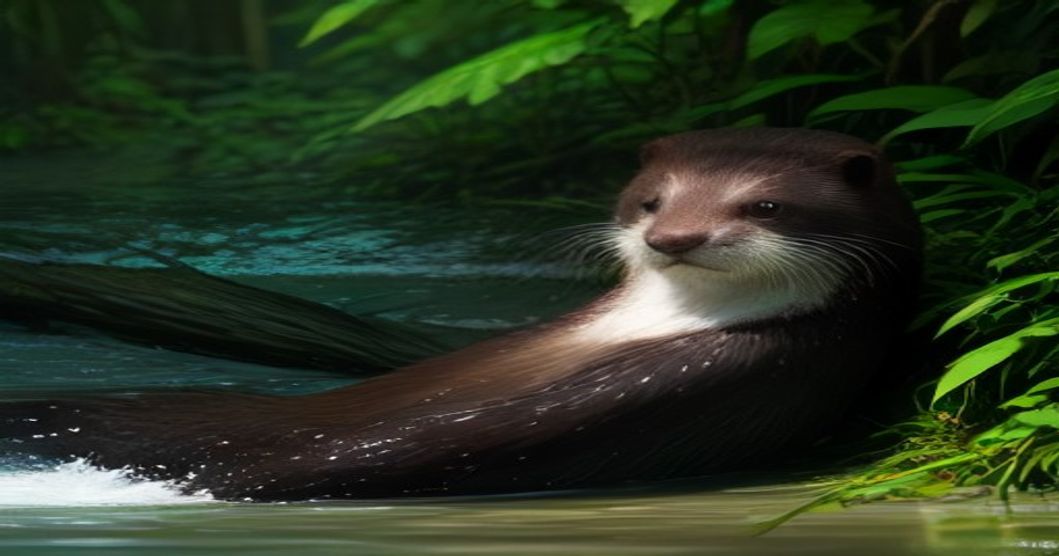
Beyond the Playful Persona: Introducing South America’s Apex Semi-Aquatic Predator
When most people picture an otter, they envision the modest, shy, and solitary European otter (Lutra lutra) slipping quietly into cold northern streams. However, the South American continent hosts a creature that completely shatters this tranquil stereotype: the Giant Otter (Pteronura brasiliensis). Known locally as the ‘river wolf’ (lobo de río), this impressive carnivore is the longest member of the mustelid family, demanding respect from both wildlife biologists and the apex predators sharing its habitat.
Formidable Anatomy and Identifying Features
The sheer physical presence of Pteronura brasiliensis is startling. Adults routinely achieve a body length of 130 to 150 centimeters, paired with a robust, muscular tail measuring up to 70 centimeters. In total, a mature specimen can span well over two meters in length and weigh up to 32 kilograms. Their anatomy is a masterclass in aquatic adaptation, featuring dense, velvet-like waterproof fur, fully webbed paws armed with sharp claws, and a flattened, wing-like tail that provides explosive propulsion through the water.
From a biological perspective, one of their most remarkable physical traits is a distinct patch of cream-to-white fur located on the throat and chest. Much like a human fingerprint, the shape, pattern, and coloration of this bib are entirely unique to each individual. Field researchers rely on these markings to catalog and monitor wild populations throughout their life cycles.
Diurnal Dominance and Complex Social Structure
Unlike their nocturnal and solitary European cousins, giant otters are strictly diurnal and highly social animals. They thrive in cohesive family units typically comprising five to eight individuals, though mega-clans of up to twenty members have been documented in resource-rich areas. Each pack is anchored by an alpha breeding pair supported by older offspring that assist in hunting, territorial defense, and pup rearing.
These families establish expansive home territories along the slow-moving rivers, swamps, and oxbow lakes of the Amazon, Orinoco, and Pantanal basins. Within these territories, they excavate massive subterranean communal burrows into the riverbanks. These engineered dens can extend deeper than ten meters underground, featuring intricate networks of tunnels and dedicated sleeping and nursery chambers.
Fearsome Feeding Ecology: The River’s Apex Hunter
With high metabolic rates characteristic of mustelids, giant otters require significant caloric intake, consuming approximately three to four kilograms of food daily. While their primary diet consists of large freshwater fish—such as cichlids, characins, and piranhas—their apex predatory nature extends far beyond fish.
Hunting cooperatively, giant otters exhibit coordinated tactical intelligence. Packs regularly target and subdue formidable prey, including juvenile caimans, large water birds, rodents, and substantial snakes, including anacondas. On land, they readily forage for birds’ eggs and small mammals. Their sheer aggression, agility, and bone-crushing jaw mechanics make them feared by almost every competitor in their ecosystem.
Conservation Status and Wildlife Health Insights
Despite their dominance in the wild, giant otters face severe ecological threats. Classified as Endangered on the IUCN Red List, their populations have suffered dramatic declines due to historical pelt poaching, ongoing habitat destruction, gold mining pollution (particularly mercury contamination), and human-wildlife conflict. Because they sit at the top of the freshwater food web, the clinical health of giant otter populations serves as a critical bioindicator for the overall vitality of the Amazonian river basin ecosystems.