
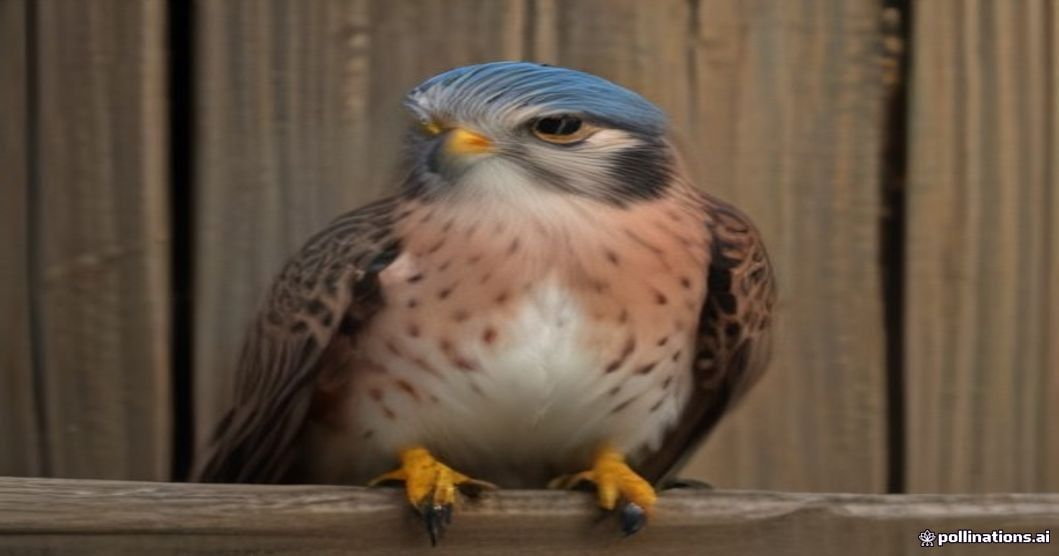
Meet the American kestrel (Falco sparverius), the smallest falcon native to North America. Despite weighing a mere 100 to 120 grams, this miniature raptor is an absolute powerhouse of the avian world, boasting remarkable hunting adaptations and a widespread presence across the Americas.
Master of Precision and Stability
One of the most fascinating traits of the American kestrel is its extraordinary visual stabilization. Whether perched on a violently wind-blown tree branch or a swaying utility wire, this falcon can keep its gaze locked firmly onto insects and other small prey in open areas. This incredible ability to stabilize its head ensures that nothing escapes its sharp vision, making it a ruthlessly efficient hunter.
Diet and Falconry
As a carnivorous predator, the American kestrel’s diet is surprisingly diverse for its small size. It primarily feeds on large insects, small birds, lizards, and snakes. Because of its keen intelligence, manageable size, and impressive hunting prowess, this species is frequently utilized in the sport of falconry across the United States.
Global Distribution and Conservation Status
The American kestrel is remarkably widespread, inhabiting regions across North, Central, and South America, as well as the Caribbean islands. Its natural range stretches from the chilly expanses of Canada in the north all the way down to the Falkland Islands in the south.
With an estimated population of over one million breeding pairs, the American kestrel is thriving. Thanks to its high adaptability to urban and human-altered environments, it stands alongside the common kestrel of Eurasia and Africa as one of the most abundant birds of prey in the entire world.