
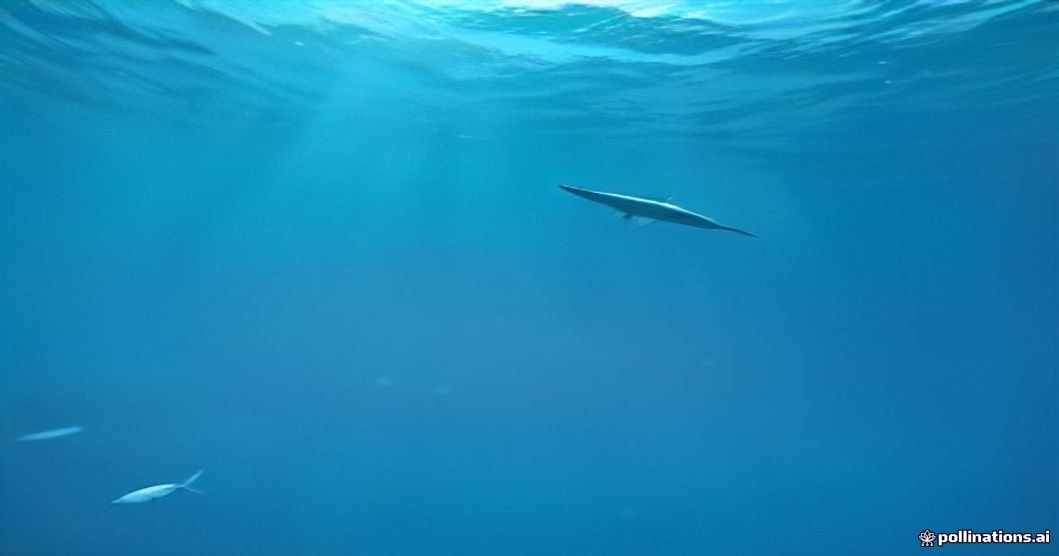
Introduction to the Flying Fish
In the vast expanse of the world’s tropical seas lives one of nature’s most extraordinary aquatic acrobats: the flying fish, scientifically known as Exocoetus volitans. While it may seem like something out of a fantasy novel, this remarkable creature possesses the genuine ability to launch itself out of the water and glide through the air, captivating marine biologists and nature enthusiasts alike.
Anatomy and Adaptations for Flight
Growing up to an impressive 30 centimeters in length, the Exocoetus volitans is specifically adapted for both an aquatic and aerial existence. Its secret weapon lies in its exceptionally large, wing-like pectoral fins. When threatened by fast-swimming predators or when navigating the open pelagic waters, these fish use their powerful tails to accelerate rapidly beneath the surface.
The Mechanics of an Ocean Launch
The takeoff is nothing short of physics in action. Bursting from the water at a precise angle of 30 to 45 degrees, the flying fish can soar up to remarkable heights of 5 meters above the surface. Utilizing its hydrodynamic design and wing-like fins, it achieves breathtaking speeds of up to 80 kilometers per hour, allowing it to escape danger with incredible efficiency.
Diet and Marine Habitat
Thriving in warm, tropical pelagic environments, the flying fish plays a vital role in the open-ocean food web. Its diet primarily consists of microscopic plankton and small crustaceans drifting in the currents. As both a predator of micro-organisms and prey for larger marine life, its survival is crucial to the balance of tropical oceanic ecosystems.
Conservation Status and Future Outlook
Fortunately, for animal lovers and conservationists, the conservation status of the Exocoetus volitans is currently classified as ‘Least Concern’. Because they are not typically targeted by large-scale commercial fishing operations, their wild populations remain relatively stable. However, protecting their vast marine habitats from pollution and climate change remains essential for safeguarding the future of these incredible aquatic aviators.