
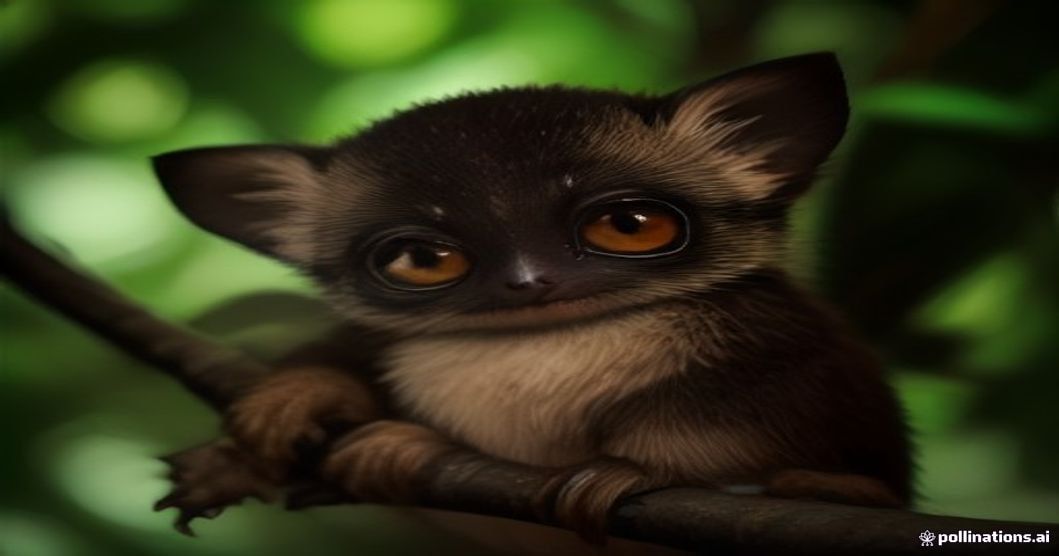
When exploring the fascinating world of exotic wildlife and specialized animal anatomy, few creatures captivate the imagination quite like the tarsier. Native to the islands of Southeast Asia, these tiny, arboreal primates possess a variety of unique adaptations, but their most distinguishing and mesmerizing feature is undeniably their eyes.
Anatomy of a Nocturnal Hunter
To truly appreciate a tarsier, one must look directly into its face. A tarsier’s eyes are so massive that a single eyeball is actually larger than its entire brain. In fact, if human eyes were proportionally as large as a tarsier’s, they would be the size of grapefruits! These enormous eyes are fixed in their sockets, meaning the tarsier cannot roll its eyes to look around. Instead, much like an owl, it has evolved specialized neck vertebrae that allow it to rotate its head a staggering 180 degrees in either direction to scan its environment.
Evolutionary Marvels for Low-Light Survival
As strictly nocturnal creatures, tarsiers rely heavily on their specialized vision to navigate dense rainforests and hunt for prey in near-total darkness. Their eyes are packed with an exceptionally high density of rod photoreceptors, which are sensitive to dim light. While this grants them phenomenal night vision, it comes with an evolutionary trade-off: tarsiers have completely lost their cone photoreceptors, meaning they see the world entirely in shades of gray, lacking the ability to perceive color.
Conservation and Care in the Wild
Despite their remarkable evolutionary adaptations, tarsiers face significant threats in the wild due to habitat destruction and the illegal pet trade. As a veterinarian and animal welfare advocate, it is crucial to emphasize that tarsiers are notoriously difficult to care for in captivity. Their specialized diet, sensitivity to stress and bright lights, and nocturnal nature make them completely unsuitable as pets. Protecting their natural rainforest habitats is the only way to ensure these wide-eyed wonders continue to thrive in the wild.