
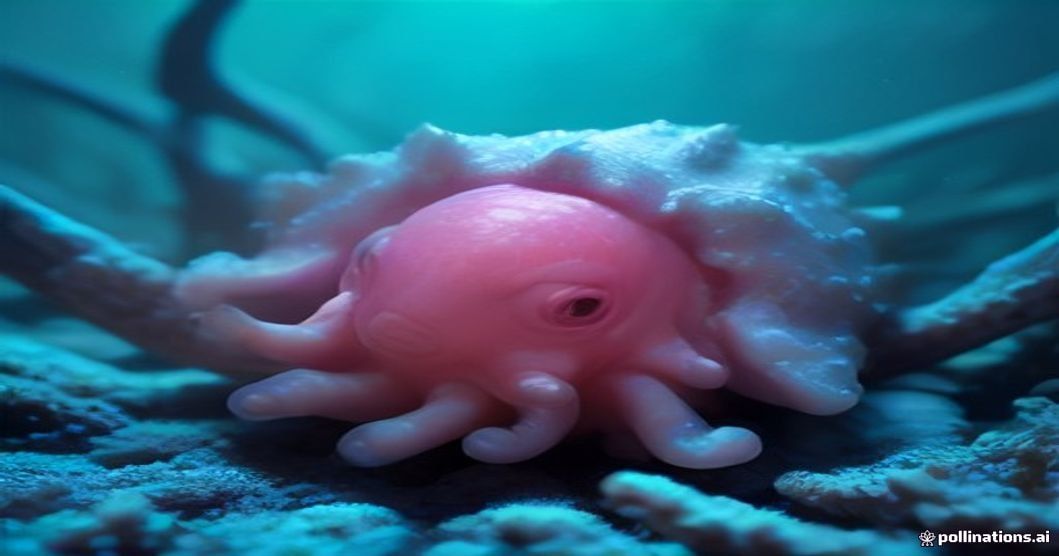
Introduction to the Star-Sucker Pygmy Octopus
In the vast expanse of the Indo-Pacific oceans, nature often proves that size is not a prerequisite for complexity. Octopus wolfi, commonly known as the Star-Sucker Pygmy Octopus, holds the title of the world’s smallest known octopus species. Despite its diminutive stature, this cephalopod exhibits the same high intelligence and predatory skill as its larger relatives, making it a subject of fascination for marine biologists and animal health experts alike.
Physical Characteristics and Micro-Biology
The most striking feature of Octopus wolfi is its incredibly small size. Adults typically measure less than 2.5 centimeters in total length and weigh less than a single gram. To put this in perspective, a fully grown adult is small enough to comfortably sit on a human thumbnail. Evolution has favored this miniature form, allowing the species to occupy unique ecological niches—such as tiny crevices in coral reefs—that remain inaccessible to larger, more traditional predators.
Habitat and Geographical Distribution
Octopus wolfi is primarily found in the western Pacific Ocean, with a wide distribution range spanning the Indo-Pacific region, from the Red Sea to the tropical waters of Tahiti. They are generally found at relatively shallow depths, typically ranging from 3 to 30 meters. This shallow-water habitat provides them with a rich ecosystem of coral reefs and rocky outcrops, which are essential for both protection and hunting.
Dietary Habits and Development
The dietary requirements of Octopus wolfi evolve significantly as they mature. In their earliest stages, hatchlings survive on nanoplankton, which are microscopic organisms drifting in the water column. As they transition into adulthood, their diet shifts toward more substantial prey. Despite their size, they are efficient hunters, preying upon krill, small crustaceans, and tiny mollusks. Their hunting strategy involves sophisticated camouflage and precise manipulation of their suckers to secure prey.
Lifespan and Conservation Status
Typical of many small cephalopods, Octopus wolfi has a fast-paced life cycle. Their average lifespan ranges between 1 and 1.5 years. During this brief period, they must rapidly reach sexual maturity and reproduce to ensure the survival of the next generation. Currently, the IUCN classifies Octopus wolfi as ‘Least Concern,’ indicating a stable and thriving population across their range. Their resilience is a testament to the biological diversity of the coral reef systems they inhabit.