
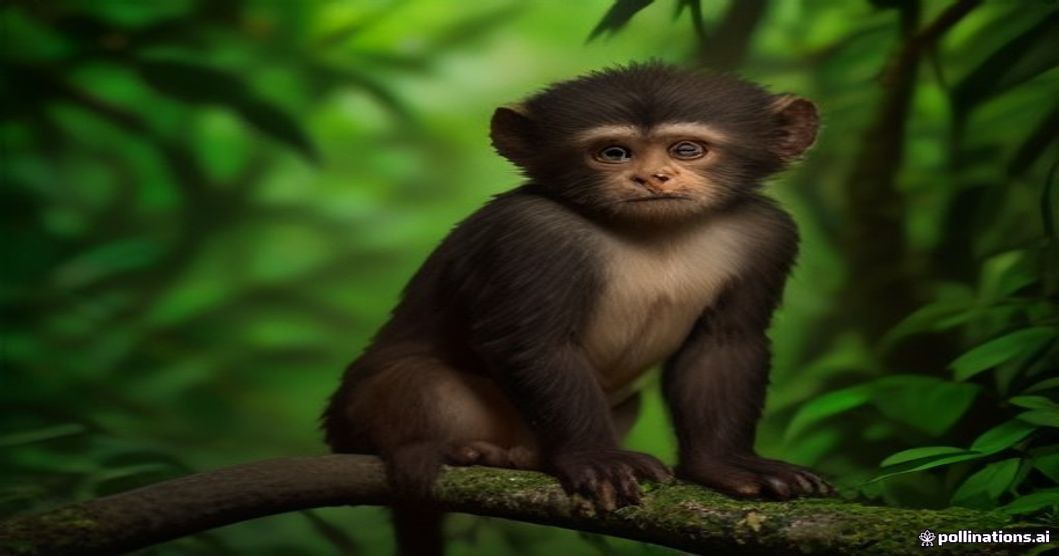
When exploring the rich biodiversity of the African continent, primates often command the spotlight with their remarkable intelligence and intricate social systems. Among these fascinating creatures stands the Angolan talapoin monkey (Miopithecus talapoin), a miniature marvel holding the title of the smallest Old World primate. Despite their diminutive size, these monkeys boast an incredibly dynamic lifestyle, complex social hierarchy, and remarkable ecological adaptability.
Physical Characteristics: A Miniature Masterpiece
The Angolan talapoin monkey is exceptionally petite compared to its baboon and guenon cousins. Adult individuals measure between 32 and 45 centimeters in head-to-body length, accompanied by a slender tail that stretches from 35 to 50 centimeters. Weighing merely 0.8 to 1.9 kilograms (roughly 1.8 to 4.2 pounds), their lightweight anatomy is specifically built for agility in dense vegetation. They possess large, expressive eyes, rounded craniums, and sleek greenish-grey to yellowish coats that blend seamlessly into the dense canopy of their native habitats.
Habitat and Geographical Distribution
Endemic to central and southwestern Africa, the Angolan talapoin monkey thrives primarily in the southern basin of the Congo River, spanning regions of Angola and the Democratic Republic of the Congo. These primates are strictly riparian specialists; they rarely venture far from a reliable water source. Their preferred environments include dense tropical rainforests, mangrove swamps, and lush riverbank edges. Notably, they also exhibit behavioral flexibility by foraging along forest edges and occasionally near human settlements where agricultural resources are accessible.
Social Dynamics and Daily Life
Talapoins are diurnal animals that organize themselves into remarkably large social units, often comprising between 70 and 100 individuals. Unlike many territorial primates, these troops do not actively defend rigid boundaries, allowing overlapping home ranges with minimal aggressive inter-group conflict. Within the troop, females typically outnumber males, and several dominant males coexist peaceably at the core of the group. As evening approaches, large daytime foraging bands often disperse into smaller, intimate sub-units to sleep in the protective branches overhanging rivers, keeping them safe from terrestrial predators.
Nutritional Profile and Foraging Behavior
From an ecological and biological standpoint, the Angolan talapoin maintains a versatile, opportunistic omnivorous diet. Their daily nutritional intake consists of high-energy fruits, nutrient-rich seeds, fresh plant shoots, and leaves, balanced by animal proteins such as insects, bird eggs, and small vertebrates. Their small size allows them to navigate frail branches that larger primates cannot access, granting them exclusive entry to untapped food niches.
Vocal Complexity and Veterinary Health Insights
Communication is vital to survival in the dense understory. Talapoins employ a rich acoustic repertoire consisting of chirps, soft grunts, sharp barks, and piercing screams to navigate group cohesion and signal danger. Because their populations frequently skirt human settlements and river systems, veterinary epidemiologists actively study these primates regarding zoonotic pathogen transmission and habitat fragmentation impacts. Safeguarding riparian corridors remains critical for preserving the subtle balance required by these miniature primates to thrive in their native African ecosystems.