
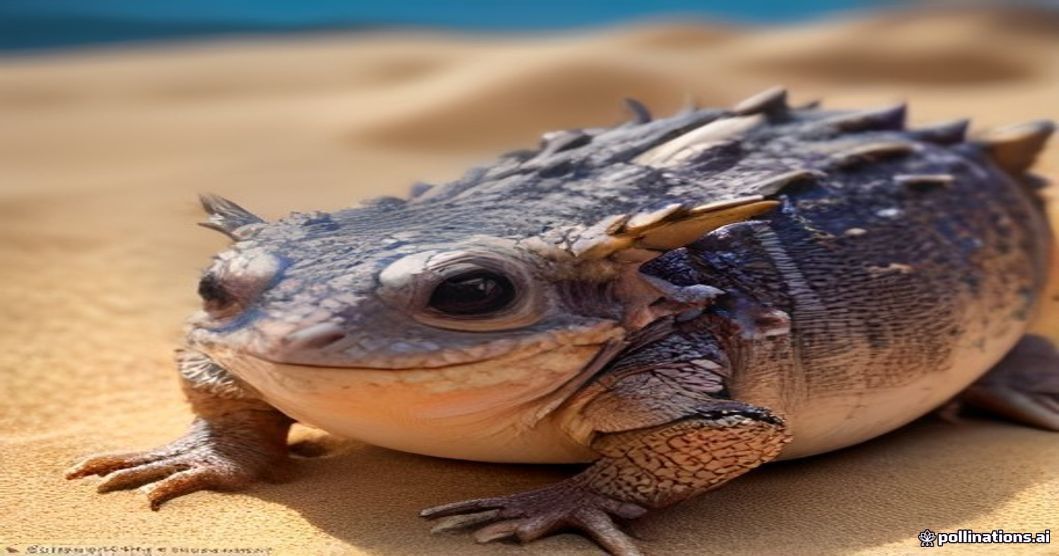
Introduction to the Texas Horned Lizard
The Texas Horned Lizard, scientifically known as Phrynosoma cornutum, is a truly remarkable reptile often affectionately referred to as the ‘Horned Toad’ or ‘Horned Frog’. Despite these amphibian-inspired nicknames, it is a true lizard, easily recognized by its robust, rounded body and blunt snout. A closer look reveals that those intimidating horns are not just for show; they are actual extensions of the skull containing real bone, providing both a formidable appearance and genuine structural defense.
Camouflage and Natural Habitat
One of the most impressive traits of the Texas Horned Lizard is its remarkable ability to adapt its coloration to its surroundings. Ranging from pale yellow and reddish-brown in arid desert environments to deeper browns in grassy prairies, their scales provide near-perfect camouflage against the earth’s natural hues. Because they rely heavily on environmental warmth to regulate their body temperature, these docile creatures love to bask in the sun to produce essential vitamin D. It is quite common to spot them resting along open, rocky areas or roadsides during the day, while at night, they safely burrow into the sand to sleep.
Unique Defense Mechanisms
Despite their fierce and spiky appearance, Texas Horned Lizards are actually quite docile and prefer to avoid conflict. When threatened by a potential predator, their first line of defense is passive: they will puff up their bodies to appear much thicker, making it physically difficult for predators to swallow them. However, if intimidation fails, they possess one of the most bizarre and fascinating defense mechanisms in the animal kingdom—they can actually restrict blood flow from their head, increasing pressure until the capillaries in the corners of their eyes rupture, allowing them to squirt a stream of blood directly at predators to deter them!