
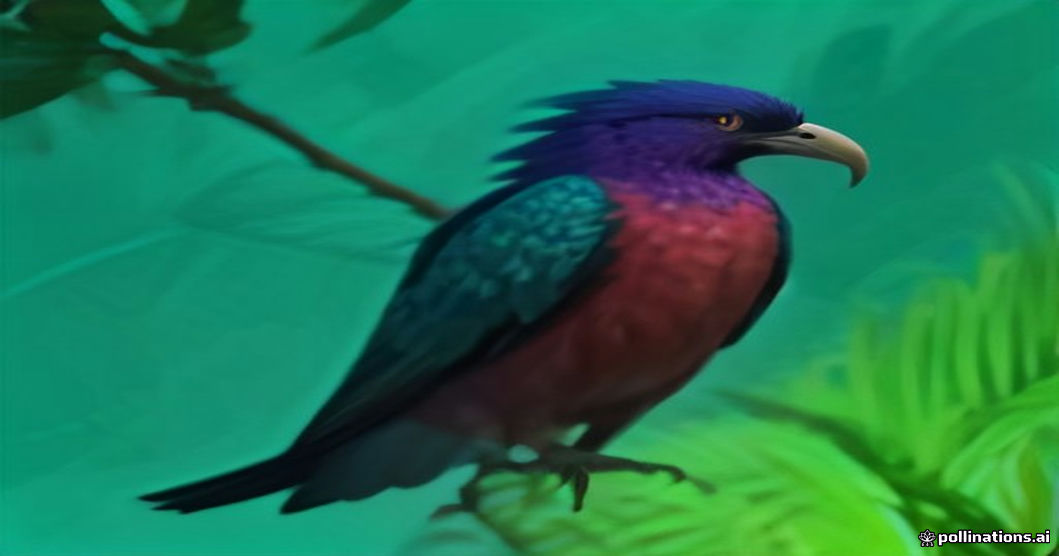
Introduction to Wallace’s Standardwing
Wallace’s Standardwing, scientifically known as Semioptera wallacii, is one of the most fascinating and visually striking avian species found on our planet. As an endemic treasure of the Moluccan Islands in eastern Indonesia, this remarkable bird marks the westernmost geographical range of the famous bird-of-paradise family, captivating ornithologists and nature enthusiasts alike with its evolutionary uniqueness.
Size, Appearance, and Sexual Dimorphism
Reaching a body length of up to 28 cm, Wallace’s Standardwing exhibits striking sexual dimorphism. Adult males are a breathtaking sight, boasting an iridescent purple-blue back, a radiant emerald-green chest, and two distinctive pairs of long, elegant white wing feathers that set them apart from all other avian species. In contrast, females are more subtly adorned in muted olive-brown tones and are generally smaller in size, though they surprisingly possess a relatively longer tail, providing them with essential camouflage within their dense forest habitats.
Mating Behavior and Fascinating Facts
Beyond its stunning aesthetics, the behavioral ecology of Wallace’s Standardwing is equally captivating. Male standardwings are polygamous and engage in elaborate, mesmerizing aerial displays during the mating season. During these performances, they proudly showcase their vibrant plumage and unique wing streamers to attract prospective mates, offering a truly unforgettable spectacle of avian courtship in the wild.