
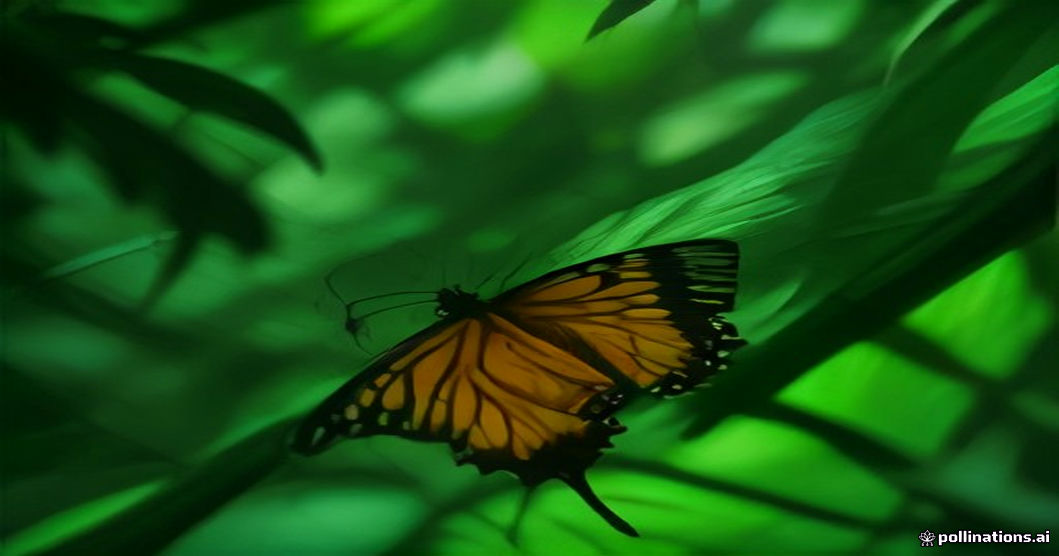
A Sticky Situation with a Surprising Twist
Imagine stumbling upon a mesmerizing scene in the wild: a delicate Tiger Butterfly becomes entangled in a formidable spider’s web. You might hold your breath, expecting the worst. Yet, in a bizarre turn of events, the spider actively destroys its own trap, choosing to let the vibrant insect fly away unharmed. Was this captured in some mythical paradise? Not quite. This is the fascinating reality of nature’s biochemical defense mechanisms at play.
The Secret Behind the Toxin
The secret to this butterfly’s miraculous escape lies in its humble beginnings. Long before it took to the skies with striking patterned wings, the Tiger Butterfly (scientifically known as Parthenos sylvia) was a voracious caterpillar. During its larval stage, it feeds exclusively on the toxic leaves of plants belonging to the genus Adenia. Rather than succumbing to the potent plant poisons, the caterpillar absorbs and metabolizes the toxins, retaining them throughout its metamorphosis into adulthood. As a result, the adult Tiger Butterfly produces its own powerful deterrent, making it completely unpalatable—and potentially deadly—to would-be predators like spiders and birds.
Habitat and Geographic Range
This clever evolutionary strategy has allowed the Tiger Butterfly to thrive across diverse tropical landscapes. Native to the lush regions of India and Sri Lanka, its range also extends deeply into Southeast Asia, encompassing countries such as Myanmar, Malaysia, the Philippines, and as far as New Guinea. In these dense ecosystems, where predators lurk around every corner, chemical defense is often far more effective than physical speed or camouflage.
A Lesson in Animal Survival
For pet owners, veterinarians, and animal enthusiasts alike, the story of the Tiger Butterfly offers a captivating glimpse into the complexities of animal health and survival in the wild. While our domestic cats and dogs rely on us for protection against environmental hazards, wild species have spent millennia developing remarkable, built-in strategies to safeguard their own health and ensure the survival of their species. It just goes to show that in the animal kingdom, sometimes a bitter diet is the sweetest form of protection.